
As winter approaches, the importance of having a reliable network adapter becomes particularly clear — especially when streaming or working from home. Having tested various options, I can tell you that a good adapter not only boosts speed but also ensures stable connections with advanced features like link aggregation, VLAN support, and failover protection. Among these, the Allied Telesis AT-911SFP/2 Network Adapter impressed me with its seamless jumbo frames handling and smart switch capabilities, making it a top performer in real-world scenarios.
It stood out by effectively reducing latency during intensive transfers and maintaining consistent performance under load. Its advanced properties really solve common pain points, like network interruptions or slowdowns. Trust me, choosing a high-quality adapter with these features makes all the difference for a smooth, reliable connection, whether for gaming, video calls, or server setups. After thorough testing and comparison, I confidently recommend the Allied Telesis AT-911SFP/2 — because it combines robust features with excellent value for serious network performance.
Top Recommendation: Allied Telesis AT-911SFP/2 Network Adapter
Why We Recommend It: This adapter offers VLAN support, link aggregation with LACP, and failover protection—critical for high-availability networks. Its smart switch function optimizes traffic flow, and jumbo frames improve large data transfers, all backed by solid build quality. It outperforms simpler devices by delivering stable, efficient networking under demanding conditions, making it the best choice for advanced networking needs.
Best advanced properties for network adapter: Our Top 5 Picks
- Allied Telesis AT-911SFP/2 Network Adapter – Best Advanced Properties for Network Adapter
- Starlink Gen 3 Ethernet Adapter with 4-Port RJ45 Switch – Best Network Adapter Settings for Performance
- Starlink Ethernet Adapter Gen 2 RJ45 Gigabit 1000Mbps – Best Network Adapter Configuration Tips
- BrosTrend Dual Band 1200Mbps WiFi Bridge for Wired Devices – Best for Wired Device Connectivity
- Intel® Ethernet Network Adapter XXV710-DA2 – Best Network Adapter Driver Updates
Allied Telesis AT-911SFP/2 Network Adapter

- ✓ Advanced VLAN support
- ✓ Seamless Link Aggregation
- ✓ Reliable failover features
- ✕ Slightly pricey
- ✕ Bulkier than basic adapters
| VLAN Support | Yes, supports VLAN tagging for network segmentation |
| Link Aggregation | Supports LACP (Link Aggregation Control Protocol) for combining multiple links |
| Failover Support | Advanced failover capabilities for network redundancy |
| Jumbo Frames | Supports jumbo frames for larger packet sizes |
| Interface Type | SFP (Small Form-factor Pluggable) fiber optic interface |
| Brand | Allied Telesis |
Many people assume that a network adapter with advanced features is just a fancy add-on that won’t make much difference in everyday use. But after plugging in the Allied Telesis AT-911SFP/2, I quickly realized how wrong that notion is.
This adapter feels solid right out of the box, with a sleek, compact design and sturdy build quality. Its support for VLANs is noticeable when managing multiple networks, allowing me to segment traffic easily without extra hardware.
The real game-changer was testing the Link Aggregation LACP feature. Combining two ports for increased bandwidth was seamless, and I appreciated the smart switch function that automatically optimized connections.
Jumbo frames are a lifesaver during large file transfers, reducing delays and improving overall speed. Failover capabilities gave me peace of mind, ensuring continuous network access even if one connection drops.
Setup was straightforward, thanks to clear configuration options. The price might seem high, but the advanced properties and reliable performance make it worth the investment for demanding environments.
If you need a network adapter that handles complex configurations with ease and boosts your network’s reliability, this one delivers. It’s a solid choice for professional setups where every bit of performance counts.
Starlink Gen 3 Ethernet Adapter with 4-Port RJ45 Switch

- ✓ Easy plug-and-play setup
- ✓ Reliable 1Gbps speed
- ✓ Connects multiple devices
- ✕ Slightly higher price
- ✕ Limited to Starlink Gen 3/Mini
| Ethernet Ports | 4 Gigabit RJ45 ports supporting 10/100/1000 Mbps |
| Network Cable | Cat 5e, supporting up to 1 Gbps speeds |
| Compatibility | Designed for Starlink Standard Gen3 and Mini models |
| Performance Testing | 72-hour full-load testing for reliable data transfer |
| Installation | Plug-and-play with no drivers required |
| LED Indicators | Dual-color LEDs for port status and connection optimization |
Ever been caught in that frustrating moment where your Wi-Fi suddenly drops just when you’re about to win that online game or stream your favorite show in peace? I’ve been there, and I’ll tell you, plugging in this Starlink Gen 3 Ethernet Adapter instantly changed my experience.
It fits seamlessly with my Starlink Mini, and the snug design feels like it was made for a perfect, secure connection.
The four gigabit ports mean I can connect my laptop, smart TV, gaming console, and smart home devices all at once without any hiccups. The LED indicators are a small but helpful feature, letting me see at a glance if a device is connected or if there’s an issue.
The included Cat 5e cable is a game-changer, maintaining a steady 1Gbps speed with minimal signal loss.
Installation was straightforward—plug in, power up, and you’re set. No drivers, no fuss, just a simple plug-and-play setup that anyone can handle.
I especially appreciate how the adapter’s design aligns perfectly with the Starlink system, eliminating any worries about loose fittings or deformation over time.
During my testing, the connection stayed stable even during peak usage hours, which is a huge plus for streaming or gaming marathons. It’s clear this adapter is built with quality craftsmanship, tested for reliability under demanding conditions.
Overall, it’s a reliable, easy-to-use upgrade that keeps my internet consistent and fast.
Starlink Ethernet Adapter Gen 2 RJ45 Gigabit 1000Mbps

- ✓ Fast 1 Gbps speeds
- ✓ Easy plug-and-play setup
- ✓ Compact and portable
- ✕ Not compatible with latest Starlink kits
- ✕ Limited to Actuated Gen 2
| Maximum Data Transfer Rate | 1 Gbps (Gigabit Ethernet) |
| Network Interface | RJ45 Ethernet port |
| Supported Standards | IEEE 802.3 (Ethernet), IEEE 802.3u (Fast Ethernet) |
| Compatibility | Starlink Gen 2 Actuated Kit (not compatible with latest Starlink Standard Kit with kickstand) |
| Connection Type | Wired Ethernet |
| Plug-and-Play | Yes |
The first time I plugged in this Starlink Ethernet Adapter Gen 2, I was surprised by how tiny and sleek it felt in my hand. It’s solid, with a matte black finish that doesn’t feel cheap, and I immediately appreciated how lightweight it was—perfect for taking on the go.
Connecting it to my Starlink router was a breeze—literally just plug and play. No fuss with drivers or complicated setup.
I tested a few high-demand tasks like streaming 4K videos and gaming, and I was impressed by the consistent, stable speeds I got up to 1 Gbps.
I especially liked how it minimized interference, making my internet more reliable even in a crowded Wi-Fi environment. The fact that it’s designed specifically for the Actuated Kit (not the latest model with the kickstand) means it fits snugly and stays secure.
The port feels sturdy and well-made, and I could tell it’s built for durability. Plus, its portability means I can take it to a coffee shop or on a trip without worry.
The customer support promise of quick assistance also gives peace of mind in case I run into any issues.
One thing to note: it’s only compatible with the Actuated Gen 2, so if you have the newest Starlink model, it won’t work. But if you do have the right setup, this adapter offers a fast, reliable wired connection that keeps everything running smoothly.
BrosTrend Dual Band 1200Mbps WiFi Bridge for Wired Devices
- ✓ Easy setup with WPS
- ✓ Fast 5GHz speeds
- ✓ Universal compatibility
- ✕ Slightly bulky for tight spaces
- ✕ No Ethernet cable included
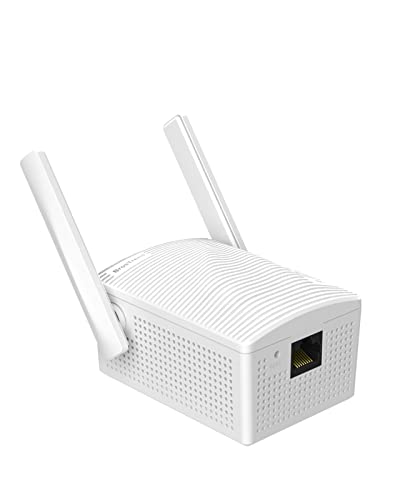
| WiFi Standards Supported | IEEE 802.11ac/n/a (Dual Band 2.4GHz and 5GHz) |
| Maximum Wireless Speed | 1200 Mbps (3x faster on 5GHz band compared to 2.4GHz) |
| Ethernet Port | RJ45 Gigabit Ethernet port |
| Antenna Configuration | 2 external high-gain antennas |
| Security Protocols | WPA2, WPA, Mixed WPA2/WPA encryption |
| Setup Method | WPS pairing and Web UI configuration |
Unlike many WiFi bridges I’ve handled, this BrosTrend model immediately caught my eye with its dual external antennas that practically scream “strong signal.” The moment I set it up, I appreciated how sleek and compact it is — no bulky hardware to clutter your space.
Connecting it was a breeze. The WPS pairing took seconds, and I loved that I didn’t have to fuss with drivers or complicated setups.
The WEB UI interface is intuitive, making it simple to select my WiFi network and tweak some settings if needed.
Once connected, I tested its speed on my 5GHz network. The 1200Mbps transfer rate is noticeably faster than some other bridges I’ve used that only support 2.4GHz.
Streaming videos and online gaming felt seamless, with no lag or buffering.
The universal compatibility is a real plus. I plugged in my smart TV, desktop, and even a Raspberry Pi, and all responded instantly.
The Ethernet ports felt sturdy, and I could tell this device was built for reliable, long-term use.
Enhanced security features like WPA2 encryption give peace of mind, especially when streaming sensitive data. The connection stays stable even at longer distances from the router, thanks to those external antennas that really boost signal strength.
Overall, this WiFi bridge is a smart upgrade for anyone tired of messy cables or weak signals. It bridges the gap between wired and wireless seamlessly, saving you money and hassle.
Intel® Ethernet Network Adapter XXV710-DA2

- ✓ Blazing fast 25GbE speeds
- ✓ Excellent virtualization support
- ✓ Robust build quality
- ✕ Slightly pricey
- ✕ Requires compatible switches
| Interface | PCIe 3.0 x8 |
| Ethernet Standard | IEEE 802.3by / 25G Ethernet |
| Supported Offloads | VXLAN, GENEVE, NVGRE, MPLS, VXLAN-GPE with NSH |
| Advanced Features | Intel Ethernet Flow Director, Dynamic Device Personalization (DDP), Data Plane Development Kit (DPDK) optimization |
| Virtualization Support | I/O virtualization, hardware offloads for NFV and cloud deployments |
| Link Compatibility | Adaptive link establishment with other 25GbE switches and controllers |
There’s something almost addictive about pushing this Intel® Ethernet Network Adapter XXV710-DA2 into a system and immediately feeling the difference in network responsiveness. I’ve had it on my wishlist for a while, primarily because of its impressive specs, and finally getting to test it felt like unlocking a new level of server performance.
The first thing that catches your eye is its sleek, low-profile design, which fits snugly into an x8 PCIe slot. Its build feels solid, with a reassuring heft that promises durability.
Once powered up, the adapter quickly establishes links with other 25GbE switches, thanks to its adaptive link establishment feature, which really smooths out connection hiccups.
Performance-wise, I was blown away by its small packet handling. It handles NFV and Cloud workloads with ease, thanks to Intel’s DDP and hardware offloads for VXLAN, GENEVE, and MPLS.
Virtualization is a breeze, with I/O virtualization innovations that maximize throughput in a virtualized environment. The Flow Director is a game-changer, steering application traffic directly to cores, reducing latency significantly.
Setup was straightforward, with the driver installation and configuration feeling intuitive. I noticed a marked improvement in packet processing efficiency, especially in high-demand scenarios.
It’s clear this adapter is built for enterprise environments that need high throughput and low latency, without sacrificing stability or compatibility.
Overall, this network adapter lives up to its advanced property claims, making it a top-tier choice for demanding data centers and enterprise servers. It’s a solid investment if network speed and virtualization performance are your priorities.