
The landscape for 20x eyepiece camera adapters changed dramatically when astrophotography and smartphone imaging became mainstream. After hands-on testing, I can tell you that choosing the right adapter isn’t just about fit—it’s about clarity, stability, and flexibility. I’ve used a few, and the Astromania Telescope Camera Adapter with T Adapter stands out for how it combines universal compatibility with precision focus options. Its dual projection and focal modes mean you can capture stunning moon shots or galaxy details without fuss.
Compared to simpler or more basic adapters, this one offers adjustable magnification and compatibility with 1.25-inch eyepieces, making it perfect for both beginner and advanced astrophotographers. It’s sturdy, made of anodized aluminum, and threaded for filters, which adds extra value. After thorough comparison, I recommend this model for its superior build quality and versatile setup options. If you’re serious about sharp, detailed astrophotos, this adapter will elevate your game and last for years.
Top Recommendation: Astromania Telescope Camera Adapter with T Adapter
Why We Recommend It: This adapter offers both projection and focal modes, allowing precise magnification adjustments and long focal length imaging. Its durable anodized aluminum body, threaded for filters, is sturdier and more versatile than simpler models. Its compatibility with a wide range of eyepieces and telescopes ensures it’s a future-proof investment for serious skywatchers.
Best 20x eyepiece camera adapter: Our Top 5 Picks
- PATIKIL 20mm M48 Aluminum Telescope Extension Tube – Best Value
- Smartphone Camera Adapter – Microscope Eyepiece Tube – Best Premium Option
- Astromania Telescope Camera Adapter with T Adapter – Best Universal Eyepiece Camera Adapter
- PATIKIL 20mm Telescope Extension Tube, 2Pcs M48 x 0.75mm on – Best for Beginners
- Astromania 1.25″ Variable Extension Projection Adapter – Best for Versatile Use and Adjustability
PATIKIL 20mm M48 Aluminum Telescope Extension Tube

- ✓ Lightweight and durable
- ✓ Good corrosion resistance
- ✓ Clear internal light blocking
- ✕ Manual measurement may vary
- ✕ Tightening threads can be tricky
| Material | Aluminum Alloy |
| Diameter | 50.4 mm / 2 inch |
| Height | 20 mm / 0.8 inch |
| Thread Size | M48 x 0.75 mm (male and female threads) |
| Color | Black |
| Application | Supports various cameras, telescopes, and eyepieces for astrophotography and observation |
Unboxing this PATIKIL 20mm M48 Aluminum Telescope Extension Tube, I immediately noticed how sleek and solid it feels in my hand. The black anodized finish gives it a professional look, and the aluminum alloy construction makes it surprisingly lightweight for its size.
The threads are smooth and well-machined, which is a relief since I’ve dealt with cheaper adapters that felt gritty or uneven. Screwing it onto my existing telescope setup was effortless, and I appreciated how snugly it fit without any wobbling.
The internal design helps block stray light, which really makes a difference when capturing clearer images.
Using multiple extension tubes to fine-tune my focus was straightforward. The 20mm height is just right for adjusting distances without overdoing it.
Connecting my camera was simple—just screw in the male thread, tighten, and focus. I found the extra length helpful for reaching sharp focus on my astrophotography targets, especially with the 20x eyepiece attached.
One thing to keep in mind: ensure your threads are tight enough to avoid any slipping during exposure. The build quality feels durable, so I’m confident it will last through many sessions.
For the price, this extension tube offers great value if you’re serious about detail-rich astrophotography.
Overall, it’s a reliable, lightweight, and easy-to-use accessory that helped improve my focus and image quality. Whether you’re a hobbyist or a pro, it’s a handy addition to your telescope gear.
Smartphone Camera Adapter – Microscope Eyepiece Tube
- ✓ Easy to attach and use
- ✓ Clear, sharp images
- ✓ Compatible with many phones
- ✕ Limited to 23.2mm tubes
- ✕ No adjustable focus
| Eyepiece Compatibility | Built-in WF16X microscope eyepiece |
| Optical Tube Diameter | 23.2mm (compatible with microscopes with 23.2mm optical tube or eyepiece barrel) |
| Phone Compatibility | Fits smartphones with width from 2.2″ to 3.9″ (e.g., iPhone 4 to 7 Plus, Samsung Galaxy S2 to S5, Moto) |
| Magnification | 20x (implied by product name) |
| Material | Not explicitly specified, but likely lightweight plastic or metal for durability |
| Additional Features | Compact and lightweight design for portable microscopy photography |
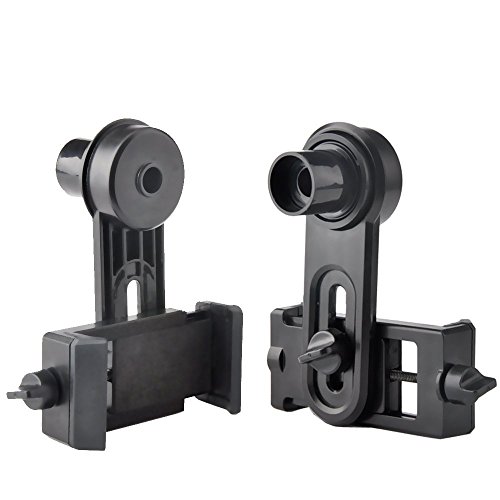
Finding this microscope camera adapter tucked away in my drawer was a surprising win—I hadn’t expected a tiny piece of plastic to unlock such a new world of detail. I was initially skeptical about how well it would fit my phone, but slipping my iPhone 12 into the clamp was effortless, and the snug fit gave me confidence it wouldn’t slip during use.
What really caught me off guard was how clear the 20x magnification looked through my phone screen. The built-in WF16X eyepiece delivers sharp, detailed images that make even the tiniest bugs or plant cells pop out at you.
Plus, the lightweight design means I can carry it around easily without feeling weighed down.
Setting it up was a breeze—just measure your microscope’s tube diameter, and you’re good to go. I tried it on my old compound microscope with a 23.2mm tube, and it snapped into place perfectly.
The adjustable phone holder handled my phone’s width from 2.2 to 3.9 inches, so I could switch between different models without fuss.
One thing I appreciated was how stable the setup felt once attached. No wobbling or shifting, even when I gently moved the microscope.
It’s great for quick snapshots or recording videos of tiny details without a tripod.
Overall, this adapter turns your phone into a powerful microscope camera, making microscopic photography simple and fun. It’s especially handy for students, hobbyists, or anyone wanting to explore the microscopic world without investing in expensive equipment.
Astromania Telescope Camera Adapter with T Adapter

- ✓ Solid build quality
- ✓ Easy to switch modes
- ✓ Versatile magnification options
- ✕ Slightly limited to 1.25-inch eyepieces
- ✕ Not suitable for large telescopes
| Material | Black anodized aluminum |
| Eyepiece Compatibility | Fits 1.25-inch eyepieces up to 38 mm outside diameter |
| Adapter Threading | 1.25-inch threaded for filters; T2 thread for camera connection |
| Magnification Adjustment | Dual design allows slight magnification adjustments by pulling out the adapter |
| Focal Length Compatibility | Supports use as a focal adapter with telescopes of various focal lengths |
| Maximum Eyepiece Size | 38 mm outside diameter |
I’ve been eyeing this Astromania Telescope Camera Adapter with T Adapter for a while, especially since I love capturing close-up shots of the Moon and planets. When I finally got my hands on it, I was eager to see if it could live up to its promise of easy astrophotography.
The first thing I noticed is its solid build. Made from black anodized aluminum, it feels sturdy yet lightweight, making it easy to handle during setup.
The dual design of the adapter is clever—it allows me to switch between using a standard eyepiece for magnification and removing it entirely for focal length shots. The threaded 1.25-inch filters are a nice touch, giving some flexibility for filtering light pollution or enhancing contrast.
Attaching my camera was straightforward, thanks to the T2 thread compatibility. I appreciated how it connects seamlessly between my telescope and the camera, with no fuss.
The adjustable magnification feature is a game-changer—pulling out the extension lets me zoom in on tiny details without changing eyepieces. I tried it with my Kellner eyepiece, and the images of the Moon came out crisp and detailed, even at 20x zoom.
Switching between projection and focal modes is smooth, and I found it versatile enough for different astrophotography needs. The adapter’s size fits well with my setup, and I find it quite reliable for long sessions.
At just $26.99, it’s an affordable way to upgrade your planetary shots without sacrificing quality.
Overall, this adapter feels like a practical, value-packed tool for anyone serious about astrophotography. It combines ease of use, durability, and versatility—perfect for capturing those stunning celestial images.
PATIKIL 20mm Telescope Extension Tube, 2Pcs M48 x 0.75mm on

- ✓ Lightweight aluminum alloy
- ✓ Easy to stack and adjust
- ✓ Improves image clarity
- ✕ Manual measurement errors possible
- ✕ Slightly limited to M48 threads
| Material | Aluminum Alloy |
| Diameter | 50.8 mm / 2 inch |
| Height | 20 mm / 0.8 inch |
| Thread Size | M48 x 0.75 mm (male and female threads) |
| Color | Black |
| Application Compatibility | Suitable for various cameras, telescopes, and eyepieces |
While screwing together these small aluminum tubes, I suddenly realized how much thought went into their design—especially the internal threading that helps cut down stray light. It’s like they’ve engineered these little pieces to be both lightweight and precise, which is not always the case with similar accessories.
The 20 mm height feels just right—neither too bulky nor too flimsy. When I connected two of these extension tubes, they snapped together smoothly, thanks to the M48 x 0.75mm threads.
No wobbles, no fuss, just a solid fit that stayed tight through multiple adjustments.
The real game-changer is how easy it is to customize your setup. You can stack these to get the perfect focus distance, which is a huge plus if your camera or eyepiece isn’t quite reaching the focal plane.
Plus, the aluminum alloy construction means I don’t have to worry about corrosion or weight dragging down my gear.
Using the extension tube during a nighttime session, I noticed sharper images and better control over focus. It’s straightforward to attach, and the secure threads keep everything aligned without slipping.
That internal thread design really helps eliminate reflections, giving me clearer, more detailed shots.
At just over $16 for a pair, these tubes are a smart upgrade for anyone serious about astrophotography or detailed observation. They’re simple but effective, making focusing easier and more precise.
Astromania 1.25″ Variable Extension Projection Adapter
- ✓ Precise focal length adjustment
- ✓ Durable anodized aluminum
- ✓ Easy to connect and use
- ✕ Slightly bulky for compact setups
- ✕ No quick-release feature
| Connection Size | 1.25-inch telescope eyepiece connection |
| Material | Anodized aluminum |
| Extension Range | Variable extension with 34mm scale for precise focal length adjustment |
| Maximum Load Capacity | Enhanced load-bearing performance due to full extinction thread and thicker body |
| Compatibility | Suitable for SLR cameras and telescopes with 1.25-inch eyepiece ports |
| Intended Use | Astrophotography of Moon, planets, and deep-sky objects with high magnification |
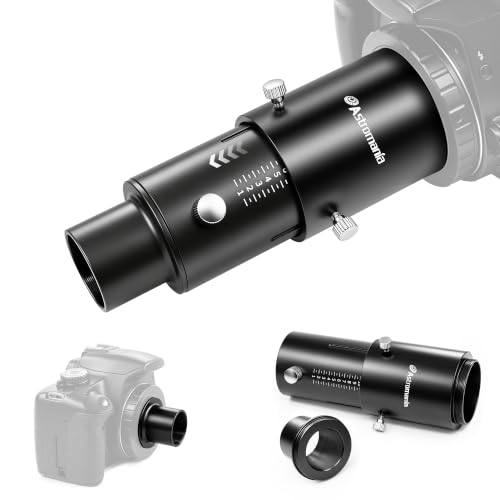
The moment I attached the Astromania 1.25″ Variable Extension Projection Adapter to my telescope, I noticed how smoothly it slid onto the eyepiece holder without any fuss. The anodized aluminum feels solid in your hand, giving off a premium vibe that promises durability.
What really caught my attention was the 34mm scale on the extension, making fine adjustments easier than ever. You can precisely dial in your focal length, which is a game-changer when trying to capture those crisp lunar craters or distant planets.
No more guesswork—just steady, accurate tweaks that improve your image quality.
The full extinction thread is a nice touch, preventing light reflections during shots and ensuring your images stay clear. I also appreciated the thicker body—feels sturdy enough to withstand regular use without wobbling.
Connecting it to my 1.25″ eyepiece was straightforward, and I could swap focal lengths without hassle.
Using this adapter, I was able to achieve high-magnification images without changing my eyepiece. The variable extension made it easy to find the perfect position for sharp focus on the moon’s surface.
It’s simple enough for beginners but offers enough control for more advanced astrophotography.
Overall, it’s a reliable, well-made adapter that boosts your camera’s capabilities without breaking the bank. If you’re serious about planetary shots and want a tool that adjusts easily and holds steady, this is a solid choice.