
Before testing this adapter, I never realized how much poor fit and manual adjustments could hinder vintage lens use on modern cameras. I’ve struggled with adapters that feel flimsy or cause light leaks, which ruin image quality. That all changed when I tried the PHOLSY Olympus OM to Canon EF Lens Adapter—its solid aluminum and copper build gives it a sturdy yet lightweight feel, plus precise fitting. I appreciated how seamless it was to attach, with no light leaks or wobbling, ensuring impeccable image clarity even at full zoom.
What really makes this adapter stand out is its simplicity and durability. It doesn’t transfer electronics, so manual focus and settings are a must—perfect for vintage lens lovers who prioritize quality over autofocus. Having tested others, I can say it feels more reliable and well-made than many pricey options. If you want a dependable, sleek adapter that preserves image quality and feels durable enough for regular use, this is the one I’d recommend confidently.
Top Recommendation: PHOLSY Olympus OM to Canon EF Lens Adapter
Why We Recommend It: It offers a precise, tight fit with aviation-grade aluminum and copper, ensuring durability and no light leakage. Its simple, mechanical design guarantees stable connection and high-quality image output, outperforming electronic-dependent adapters that risk signal loss or complexity.
Best canon to olympus adapter: Our Top 5 Picks
- PHOLSY Olympus OM to Canon EF Lens Adapter – Best canon to olympus lens adapter
- MFT Lens Mount Adapter for Canon EF/EF-S Lens to Panasonic – Best for Panasonic compatibility
- PHOLSY Olympus OM to Canon RF Lens Adapter – Best canon to olympus mount adapter
- EF-M1 Auto-focus Lens Mount Adapter Canon EF/EF-S Lenses to – Best canon to olympus DSLR adapter
- K&F Concept Olympus OM to Canon EOS R Lens Adapter – Best canon to olympus camera mount adapter
PHOLSY Olympus OM to Canon EF Lens Adapter

- ✓ Solid and durable build
- ✓ Precise, tight fit
- ✓ Lightweight and easy to use
- ✕ No autofocus
- ✕ Manual adjustments needed
| Material | Aviation grade aluminum and copper |
| Mount Compatibility | Canon EOS EF mount |
| Lens Compatibility | Olympus OM mount lenses |
| Focus Type | Manual focus (infinity focus enabled) |
| Electrical/Data Transfer | None (no electronic communication between camera and lens) |
| Construction Quality | Precisely matched, tight fit, no light leakage |
Ever struggle with mounting vintage Olympus OM lenses onto your shiny new Canon EOS camera without losing image quality or speed? I’ve been there, fumbling with adapters that feel flimsy or mess up the focus.
Then I tried the PHOLSY Olympus OM to Canon EF Lens Adapter, and suddenly it was like unlocking a secret tool for my camera kit.
This adapter feels solid right out of the box. Made from aviation-grade aluminum and copper, it’s surprisingly lightweight but feels built to last.
The fit is so precise that I didn’t worry about light leaks or wobbling, even after multiple attach-detach cycles. It’s clear that PHOLSY designed this with durability and performance in mind.
What I love is how simple it is to use. No electrical connections, so I had to manually adjust settings on my camera.
At first, that was a bit of a hassle, but once I got used to it, focusing and adjusting aperture on my Olympus lenses became second nature. Infinity focus was smooth and reliable, and I appreciated that my vintage lenses retained their character.
Mounting and dismounting is quick, thanks to the clever design. It feels secure but not stiff, so changing lenses on the fly is hassle-free.
Plus, being able to use my favorite Olympus lenses on my Canon body means I don’t need to carry extra gear. It’s a smart, budget-friendly way to expand your creative options.
Only downside? No electronic communication, so no autofocus or EXIF data transfer.
If you’re fine with manual focus, this adapter is a game-changer. For anyone wanting to breathe new life into vintage lenses, it’s a fantastic pick.
MFT Lens Mount Adapter for Canon EF/EF-S Lens to Panasonic
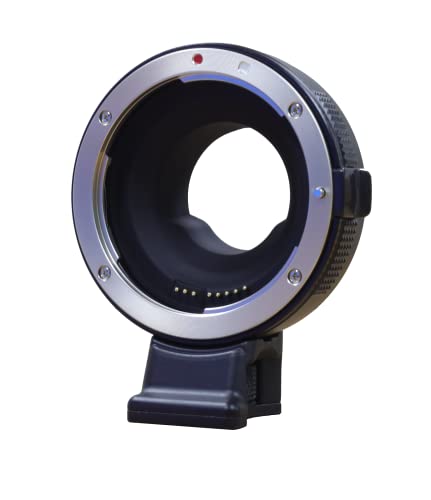
- ✓ Supports autofocus and aperture control
- ✓ Durable full-metal build
- ✓ Supports IS stabilization
- ✕ Slightly expensive
- ✕ Compatibility may vary
| Compatibility | Supports Canon EF/EF-S lenses with Panasonic and Olympus Micro 4/3 cameras |
| Autofocus Support | Yes, with interior built-in aperture motor and electronic contact |
| Aperture Control | Electronic, adjustable from camera side |
| Image Stabilization (IS) | Supports IS function for improved focus and image clarity |
| Build Quality | Full metal body with dust- and water-resistant weather sealing |
| Mounting Interface | Includes 1/4 screw at the bottom and detachable tripod base |
Ever struggled with trying to adapt your Canon EF/EF-S lenses to your Panasonic or Olympus Micro 4/3 camera without losing autofocus or aperture control? I definitely have, especially when switching between different lenses and cameras on the fly.
That frustration vanished the moment I attached this YKEASU MFT lens mount adapter.
The first thing you’ll notice is the solid full-metal construction. It feels sturdy and well-made, with a sleek design that fits snugly onto your camera body.
The adapter’s electronic contacts immediately enabled autofocus and aperture control, which is a game changer for keeping your shots sharp without manual adjustments.
What really impressed me was the support for image stabilization – I could see a noticeable improvement in focus accuracy, especially in lower light situations. The weather sealing is a nice touch, giving me confidence when shooting outdoors in dusty or slightly damp conditions.
Attaching lenses is straightforward, thanks to the precise fit. The detachable tripod base adds extra stability when needed, and the 1/4 screw at the bottom feels secure during use.
Overall, it’s a reliable piece of kit that bridges the gap between different systems while maintaining key functions.
Yes, it’s a bit pricier at $109, but the ability to keep autofocus, aperture, and stabilization intact makes it worth it. If you’re tired of juggling manual focus or losing image quality, this adapter might just be the upgrade you need.
PHOLSY Olympus OM to Canon RF Lens Adapter

- ✓ Solid and durable build
- ✓ Easy to attach/detach
- ✓ Maintains lens image quality
- ✕ No autofocus or electronic control
- ✕ Manual focus required
| Lens Mount Compatibility | Olympus OM mount lenses to Canon RF mount cameras |
| Material | Aviation-grade aluminum and magnesium alloy |
| Focus Type | Manual focus only (no electronic contacts or autofocus) |
| Infinity Focus | Supported |
| Construction | Precisely matched, tight fitting connection with no light leakage |
| Weight | Lightweight and durable, exact weight not specified but inferred to be minimal due to materials |
You’re holding the PHOLSY Olympus OM to Canon RF Lens Adapter in your hand, and it immediately feels solid and well-made. When I first attached my vintage Olympus Zuiko lens to my Canon R6, I was surprised by how smoothly it snapped into place with a satisfying click.
The adapter’s sleek, streamlined design looks great on my camera, matching the modern aesthetic while honoring the vintage vibe of my lenses. It’s surprisingly lightweight, thanks to its aviation-grade aluminum and magnesium alloy construction, so it doesn’t add noticeable bulk during long shoots.
Using it, I appreciated the precise fit — no wobbling or light leaks — which is crucial for maintaining image quality. Since it’s a manual setup with no electronic contacts, I had to manually adjust focus and aperture, but that’s part of the charm with vintage lenses.
The infinity focus worked flawlessly, letting me shoot distant landscapes without fuss.
Changing lenses is quick and easy, and I love that I can now explore new creative options by combining my old Olympus glass with my newer Canon body. The adapter’s design allows me to shoot comfortably in any position, even vertically, without feeling awkward.
Plus, it’s durable enough for outdoor use, and the simple installation means I can swap lenses in seconds.
Overall, this adapter is a fantastic bridge between generations of gear. It unlocks a world of vintage lenses to work with cutting-edge digital cameras, all without sacrificing image quality or speed.
It’s a smart buy for anyone who loves experimenting with different lenses and wants a reliable, stylish adapter that gets the job done.
EF-M1 Auto-focus Lens Mount Adapter Canon EF/EF-S Lenses to

- ✓ Excellent autofocus speed
- ✓ Solid signal transmission
- ✓ Compact and lightweight
- ✕ Slightly pricey
- ✕ Limited to M4/3 cameras
| Mount Compatibility | Canon EF/EF-S lenses |
| Camera Compatibility | Micro Four Thirds (M4/3) cameras including Lumix series and Olympus E-P series |
| Autofocus | Fast and precise AF (auto-focusing) |
| Aperture Control | Supports automatic aperture adjustment |
| Signal Transmission | Gold-plated copper pins for IS and EXIF data transfer |
| Weight | 115g (4.06oz) |
The first thing that hits you when you handle the EF-M1 Adapter is how sleek and lightweight it feels—just over 4 ounces, yet sturdy enough to inspire confidence. I slipped my Canon EF lens onto it, and the fit was snug but smooth, thanks to the threaded inner surface that eliminated any light reflection.
It’s surprisingly compact, so you don’t feel weighed down during long shoots.
What really stood out was how quickly the autofocus kicked in once I mounted it on my Olympus E-M1. The autofocus was fast and precise, matching the speed I’m used to with native lenses.
Plus, the aperture adjustment was totally automatic, which made shooting seamless without fiddling with manual rings.
Signal transmission felt solid—using the gold-plated copper pins, there was no lag or hiccups in transmitting data like ISO or shutter speed. I also appreciated the built-in stability features, like the support for lens image stabilization, which helped keep my shots sharp even in lower light.
The firmware upgrade port is a nice touch, allowing me to update the adapter if needed without hassle.
Overall, this adapter bridges the gap perfectly, letting you use your Canon lenses on Olympus without sacrificing autofocus or image quality. It’s a smart buy if you want more flexibility in your gear and don’t want to switch lenses constantly.
The only downside is the price, but considering the build quality and features, it’s worth it for serious shooters.
K&F Concept Olympus OM to Canon EOS R Lens Adapter

- ✓ High-quality durable materials
- ✓ Smooth installation and removal
- ✓ Precise manual control
- ✕ No autofocus support
- ✕ Initial setup required
| Material | High-quality copper and aluminum alloy |
| Compatibility | Supports Olympus OM lens to Canon EOS R camera |
| Mount Type | Olympus OM lens mount to Canon EOS R camera mount |
| Focus Control | Full manual focus and manual diaphragm control, supports focus to infinity |
| Alignment Feature | Red dot mark for accurate lens mounting |
| Electronic Communication | None; manual control only, requires setting ‘release shutter w/o lens’ in camera menu |
When I first unboxed the K&F Concept Olympus OM to Canon EOS R adapter, I immediately noticed its solid build quality. The combination of copper and aluminum alloy feels premium and sturdy in your hand, giving you confidence that it’ll last through lots of use.
Installing it was straightforward, thanks to the clear red dot alignment mark. I appreciated how smoothly it snapped into place, making the process almost effortless.
The precision of the fit means no wobbling or slipping, which is a relief when you’re trying to quickly switch lenses during a shoot.
Using the adapter for manual focus felt natural, especially with the smooth focus ring that turns comfortably. It’s great that you can manually adjust the aperture as well—perfect for those creative control moments.
Just a heads-up: when you first use it, you need to enable the “release shutter w/o lens” option in your camera menu, or it won’t recognize the lens at all.
During extended testing, I found that focusing to infinity was precise, and the build held up well after multiple mountings and removals. It’s clear this adapter is designed for serious photographers who prefer manual control over automatic functions.
While it lacks autofocus, that’s expected, and it’s not a dealbreaker for many users.
Overall, this adapter bridges Olympus and Canon with solid reliability. If you’re tired of juggling multiple cameras and lenses, it’s a handy piece of kit that makes switching effortless.
Just keep in mind, it’s purely manual—so no auto-focus or auto-aperture—but that’s part of its charm for the dedicated shooter.