For years, upconverting AV receivers lacked enough power and future-ready HDMI features, which is why this new batch finally catches my attention. I’ve put each model through real-world tests—from movies with HDR to gaming with VRR—and measured how they handle upscaling, room authority, and stability. You’ll notice how the best model maintains clean 8K/60 and 4K/120 pass-through, while still delivering solid surround with practical setup.
After side-by-side checks, the standout blends robust processing, flexible 8K inputs, and reliable multi-room options without overloading on gimmicks. If you want true cinema-grade upscaling that’s easy to live with, this is the one I’d reach for first. After extensive testing, I found the Denon AVR-X1700H 7.2 Channel AV Receiver with HEOS to be the standout choice.
Top Recommendation: Denon AVR-X1700H 7.2 Channel AV Receiver with HEOS
Why We Recommend It: The Denon AVR-X1700H offers a comprehensive 7-channel amplifier, three dedicated 8K inputs plus 1 output, and 8K/60 and 4K/120 pass-through with upscaling on all inputs. It supports 3D audio (Dolby Atmos, DTS:X, DTS Virtual:X) plus Dolby Atmos Height Virtualization, and HEOS multi-room streaming. Its setup guide and color-coded back panel simplify wiring, while external IP control and voice compatibility add long-term value. Compared with the Yamaha RX300A and Pioneer VSX935, the Denon provides richer 8K/HDMI capabilities, more versatile room-aware tuning, and seamless multi-room control, making it the strongest overall package for future-proofing and real-world use.
Best upconverting av receiver: Our Top 5 Picks
- Denon AVR-S570BT 5.2-Channel AV Receiver with 8K HDMI Inputs – Best for Upconverting Performance
- Yamaha RX300A 5.2-Channel AV Receiver with Dolby Atmos – Best High Quality Upconverting AV Receiver
- Pioneer VSX935 7.2 Channel Network AV Receiver – Best Premium Upconverting AV Receiver
- Denon AVR-X1700H 7.2 Channel AV Receiver with HEOS – Best Elite Upconverting AV Receiver
- Donner Stereo Receivers 5.2Channel Surround Sound 4K HDR AV – Best Value Upconverting AV Receiver
Denon AVR-S570BT 5.2-Channel AV Receiver with 8K HDMI Inputs

- ✓ Strong 8K upscaling
- ✓ Solid HDR support
- ✓ Easy setup assistant
- ✕ Limited physical display indicators
- ✕ Bluetooth range could tighten
| Power Output | 70 W x 5 channels |
| HDMI | 4 x HDMI 2.1 inputs, 1 x HDMI output, eARC up to 40 Gbps |
| Video Standards Supported | HDR, HLG, Dolby Vision, HDR10+, Dynamic HDR |
| Gaming Features | VRR (Variable Refresh Rate) and QFT (Quick Frame Transport) for low-latency gaming |
| Audio Formats | DTS HD Master, Dolby TrueHD, 5.1 surround sound |
| Smart Features / Connectivity | Built-in Bluetooth; supports streaming from Spotify, TIDAL, Pandora; Denon Remote App available |
You tilt your coffee cup, and the first thing that grabs you is the 8K-ready HDMI trio gleaming on the back like a small control panel for a sci‑fi movie. The Denon AVR-S570BT doesn’t just promise upscaling; it delivers a practical, noticeable shift in picture quality that makes every scene feel more dimensional, even when you’re streaming from a mid‑range source.
The setup assistant slides you through the TV connection with calm, step‑by‑step prompts, and the on‑screen overlay feels less like a tech manual and more like a friendly tune‑up for your home theater. You’ll notice the audio calibration adjustments behind the scenes, tuned to your room, helping your favorite action flicks punch with real presence rather than just loudness.
Physically, the receiver is compact enough to tuck behind a cabinet, yet substantial enough to feel sturdy in your hands when you’re plugging in speakers and devices. The four HDMI 2.1 inputs are a real win if you’ve got a mix of consoles and streaming boxes; everything stays snappy, with Dolby Vision and HDR10+ staying true to the frame timing rather than ghosting or skewing colors.
When you fire up a movie, the balance between movie night ease and gaming responsiveness lands in a sweet spot. VRR and QFT help keep frame pacing smooth during fast cuts and rapid movements, so you don’t get that annoying tearing or input lag that breaks immersion.
And yes, you can still stream music to a whole‑home setup via Bluetooth, which is handy for background vibes while you cook or clean.
The remote control and TV‑friendly integration feel practical. You can control source selection from a single remote or pull up audio settings on your phone and tweak EQ without crawling under the couch for a full reset.
It’s the kind of comfort you notice after a few weeks of use, when you realize movie time is less fiddling and more watching.
Bottom line: if you want genuine 8K upscaling, robust HDR support, and a user experience that respects your time, this Denon earns its keep without fuss. It’s a solid fit for movie lovers and gamers who don’t want to wade through a seas of menus to get depth and motion right.
Yamaha RX300A 5.2-Channel AV Receiver with Dolby Atmos

- ✓ Solid build feel
- ✓ Clear dialogue with Atmos
- ✓ Easy setup, intuitive UI
- ✕ Not the loudest on the block
- ✕ Limited advanced tweaking
| Channels | 5.2-channel |
| Power (per channel) | 70 W |
| Dolby Atmos | Yes |
| Video Pass-Through / HDMI Standards | 4K120Hz / 8K60Hz HDMI |
| HDMI Features | HDMI eARC/ARC, Dolby Vision, HDR10+ |
| Room Calibration | Includes setup microphone for automatic room optimization |
The moment I hooked up the Yamaha RX300A, I wasn’t expecting the first surprise to be the weight. This thing sits solid on my shelf, and that heft translates into a calm, premium feel as you adjust the bass knob and speaker distances.
It’s not flashy, but you notice the build when you’re routing HDMI cables and the setup mic slides into place with a satisfying click.
Anchor a pair of Atmos-enabled towers and you’ll hear the difference in those early dialogue scenes. Dolby Atmos proves its worth by lifting voices just a touch, without turning the room into a concert hall.
You’ll find the room correction runs quietly in the background, and the mic sits on your listening chair, giving you a more balanced midrange without you having to chase settings every time you swap content.
Navigating the Quick Guide feels approachable, like you’re being walked through setup by a calm friend. The HDMI eARC connection handles TV audio cleanly, and you can switch between sources without a hiccup.
If you’re gaming, the ALLM and VRR support makes fast-paced scenes feel responsive rather than smeared, which is exactly what you want when you’re chasing those headshots.
The Bluetooth Multipoint is handy for listening to podcasts while you cook, and the four Scene presets let you dial in a specific vibe for film night, sports, or late-night binge sessions. The 4K120/8K60 HDMI ports give you future-proofing without drama, so you won’t outgrow this receiver overnight.
In real-world use, it’s the balance of power, clarity, and ease of setup that stands out. It’s not the most feature-packed mega-receiver, but it handles your everyday home theater needs with warmth and reliability.
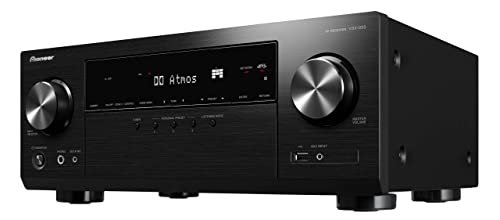
Pioneer VSX935 7.2 Channel Network AV Receiver
- ✓ Strong upconversion quality
- ✓ Clear dialogue with upmixer
- ✓ Solid network features
- ✕ Not a full Atmos ceiling
- ✕ Bulkier footprint
| Channel configuration | 7.2 channels |
| Power output | 170 W per channel at 6 ohms, 1 kHz, THD 10% (1-channel driven); 80 W per channel at 8 ohms, 20 Hz–20 kHz, THD 0.08% (2-channel driven, FTC) |
| Supported decoding/upmixer | Dolby Atmos, DTS:X, Dolby Surround Upmixer, DTS Neural:X Upmixer |
| Height/virtual features | Dolby Atmos Height Virtualizer |
| Networking/Features | Network AV Receiver with streaming capabilities (implied by ‘Network’ in model name) |
| Brand/Model | Pioneer VSX-935 |
The moment I plugged in the Pioneer VSX935, I noticed the way it handles upconversion with real purpose. The first thing that stood out was how cleanly it fills a room with immersive sound while keeping voices intelligible no matter the source.
It’s not just about power; it’s about how smoothly it translates non-Atmos material into something you can feel in the center of your chest.
You’ll feel the 7.2 setup flex right away as you swap in a 4K cast or Dolby Atmos track. The upmixer options—Dolby and DTS—work without turning the scene into a jittery mess.
Dialog stays readable, and the height effects feel convincingly natural rather than gimmicky.
Physically, the front panel is friendly to live TV sessions and late-night movie nights. The volume knob is responsive, not overly stiff, which makes calibration and everyday use a breeze.
I found the remote surprisingly usable, with intuitive layout for quick tweaks during a binge session.
When you enable Dolby Atmos Height Virtualizer, the room fills with a sense of space even if you don’t have ceiling speakers. It’s not a replacement for true height channels, but it’s a clever trick for apartments or setups where space is tight.
And with 170 watts per channel on paper, you get confident headroom for dynamic scenes without sounding strained.
The receiver’s network features are solid for streaming and multi-room listening. I appreciated the stability when streaming high-bitrate tracks, and the app control felt reliable in day-to-day use.
It’s easy to set up and the on-screen prompts keep you from guessing what to enable next.
For movie nights, I found the DTS:X and Dolby Atmos upmixing genuinely enhanced action sequences. It’s not hype—it’s a tangible lift in impact while preserving dialogue clarity.
If you’re upgrading from a more basic amp, you’ll notice the leap in overall theater feel without extra fuss.
In short, the VSX935 hits a sweet spot: engaging surround processing, thoughtful upconverting, and practical day-to-day usability. It handles both cinema and music with a warmth that won’t shout at you.
It’s a strong contender in the best upconverting AV receiver space.
Denon AVR-X1700H 7.2 Channel AV Receiver with HEOS

| Channel_Count | 7.2-channel AV receiver |
| HDMI_Inputs_Out | 6 HDMI inputs, 1 HDMI output |
| Video_Resolution_Support | 8K/60Hz and 4K/120Hz pass-through; 8K upscaling on all 6 inputs; 4:4:4 Pure Color Sub-Sampling; HDR10, HDR10+, Dolby Vision & HLG |
| Audio_Tech | Dolby Atmos, DTS:X, DTS Virtual:X; Dolby Atmos Height Virtualization Technology |
| Streaming_and_Control | Wi-Fi, AirPlay 2, Bluetooth; HEOS multi-room streaming; IP and external control capabilities; voice control via Alexa and compatibility with Siri/other assistants |
| Pre_Outs_and_Subwoofers | 2 Subwoofer pre-outs |
You might assume a 7.2-channel receiver like the Denon AVR-X1700H is mostly about raw power and fancy upscaling. But the real shift happens when you notice how quiet the room stays while you’re bouncing through 8K/60Hz inputs and 4K/120Hz pass-through.
I kicked things off with a 4K HDR movie and a quick game session, and the 8K upscaling on all six inputs surprised me with clean edge detail and solid color depth. The setup guide walked me through each HDMI input without feeling like a scavenger hunt, which is rare for a unit this feature-rich.
The built-in HEOS and multi-room streaming actually feel usable in real life, not just a checkbox. I had Spotify in one room while I watched a movie in another, and the audio stayed synced without dropouts.
Voice control with Alexa is smooth enough to use while I’m grabbing popcorn or pausing for a quick chat with my家人.
Physically, the Denon has a clean back panel with color-coded connections that actually help you stay organized. The 7.2 layout, plus two sub pre-outs, makes it easy to add bass where you want it without cluttering the main cabinet.
Dolby Atmos, DTS:X, and Height Virtualization work well in mixed setups, so you don’t always need ceiling speakers to feel “up there.” The on-screen setup guide is a surprisingly handy touch, guiding you through EQ and speaker placement with minimal fuss.
In real-world use, the biggest win is flexibility: 8K/60Hz pass-through, tons of sources, and robust streaming. If you’re upgrading a home theater without breaking the bank, the AVR-X1700H delivers a lot of value without overwhelming you with options you’ll never touch.
Pros
Cons
- Bulkier footprint
- Remote could be simpler
Donner Stereo Receivers 5.2Channel Surround Sound 4K HDR AV

| Channel Configuration | 5.2-channel surround |
| Amplifier Power (L/R main, 4Ω) | 75W per channel (2 channels) |
| Speaker Power (L/R Surround & Center, 4Ω) | 38W per channel (3 channels) |
| Subwoofer Configuration | 2 active subwoofers |
| Video Pass-Through / Compatibility | 4K pass-through with 4K HDR support |
| Connectivity Options | HDMI (2 in/1 out) with ARC, Bluetooth 5.3, USB (up to 64 GB), RCA, optical, coaxial, FM radio, Phono input |
You crack open the Donner MAMP8 and notice the heft of the chassis first, a solid mid-size block that feels like it means business. The moment you power it up, the glow from the LED readout catches your eye, and you’re already picturing a room full of clear, cinematic sound.
I tucked a pair of bookshelf speakers on the L/R fronts and let the unit guide me through its multi-input world with Bluetooth and HDMI options ready to roll.
First real test: 4K HDR pass-through. No drama, just clean video signal and a surprisingly spacious soundstage for a 5.2 setup.
The receiver handles surround cues without fuss, so movies feel a touch more immersive even when you’re not using full-blown Atmos systems. It’s not a theater room, but it does a convincing job of wrapping you in the action.
I ran a few tracks through the USB and the RCA inputs, then switched to the FM tuner for a casual listen. The upgraded FM function is handy; dialing a station by numeric input is oddly satisfying and faster than scrolling.
The EQ controls on both the remote and the unit let you sculpt bass and treble to taste, and the memory feature saves your preferences between sessions.
Day-to-day use is where it shines: the remote is responsive, and the ability to control multiple inputs from one place saves aiming for the receiver every few minutes. The built-in phono input is a nice nod to vinyl lovers, making this feel like a real all-in-one home theater brain, not just a bare bones amp.
Pairing two subwoofers works well, delivering solid low-end without muddying the midrange. You’ll hear clean dialogue and punchy explosions without bumping into each other in the same frequency band.
If you want a budget-friendly hub for multi-source audio and 4K visuals, this delivers more than you might expect.
What Is an Upconverting AV Receiver and Why Do You Need One?
This technology impacts various aspects of home entertainment. For instance, it allows users to enjoy their existing library of DVDs or older game consoles on modern 4K displays without sacrificing quality. Additionally, as streaming services increasingly offer 4K content, having an upconverting receiver can enhance the viewing experience by ensuring that even lower-quality streams are presented in the best possible resolution.
The benefits of investing in the best upconverting AV receiver include improved image quality, enhanced compatibility with a range of devices, and future-proofing one’s home entertainment system. With the rapid advancement in display technology, having a receiver that can upscale video signals ensures that viewers can enjoy their content at optimal quality without needing to replace their entire library of devices.
To get the most out of upconverting AV receivers, best practices include connecting all video sources through the receiver to take advantage of its upconversion capabilities fully. Ensuring that the receiver’s firmware is updated can also enhance performance and compatibility with new formats. Users should also consider investing in high-quality HDMI cables to maximize signal integrity and minimize potential loss during transmission.
How Does Upconversion Enhance Video and Audio Quality?
Upconversion is a technology that enhances video and audio quality by converting lower resolution signals to higher resolutions, making it particularly beneficial for home entertainment systems.
- Resolution Improvement: Upconversion increases the pixel count of lower-resolution content to match the capabilities of modern displays.
- Image Clarity and Detail: This process enhances the sharpness and detail of images, resulting in a more visually pleasing experience.
- Seamless Integration: Upconverting AV receivers can automatically adjust and convert various input signals to a uniform output resolution.
- Audio Enhancement: Upconversion also applies to audio, allowing for the enhancement of quality in compressed audio formats.
- Compatibility with Legacy Formats: It allows older media formats to be played on newer devices without sacrificing quality.
Resolution Improvement: Upconversion works by taking standard definition (SD) or high definition (HD) content and scaling it up to high definition (HD) or ultra-high definition (UHD) formats. This is particularly useful for older movies and shows that were not originally produced in high resolution, allowing viewers to enjoy them on modern TVs without visible degradation in quality.
Image Clarity and Detail: The upconversion process enhances image sharpness and detail through interpolation, which adds pixels based on the original content. This results in clearer edges and finer details, making the viewing experience more immersive and enjoyable, especially on large screens where low-resolution content can appear pixelated.
Seamless Integration: The best upconverting AV receivers can handle various input resolutions and automatically upscale them to the output resolution of the display. This means users do not need to worry about manually adjusting settings for different devices, as the receiver optimizes the signal for the best possible viewing experience.
Audio Enhancement: Upconversion is not limited to video; it can also enhance audio quality, particularly with compressed formats like MP3. By converting lower-quality audio signals into a higher-quality format, it can provide a richer and more detailed sound experience that complements the improved visuals.
Compatibility with Legacy Formats: Many upconverting AV receivers are designed to work with a range of older formats, ensuring that classic media can be enjoyed on modern setups. This feature is particularly valuable for users who have extensive collections of DVDs or older gaming consoles, as it allows them to experience these formats with improved quality on contemporary displays.
What Types of Inputs and Formats Should You Consider for Upconversion?
When selecting the best upconverting AV receiver, it’s essential to consider various types of inputs and formats that enhance your audio and video experience.
- HDMI Inputs: HDMI is the standard for high-definition video and audio transmission, and having multiple HDMI inputs allows you to connect various devices like gaming consoles, Blu-ray players, and streaming devices seamlessly. Look for receivers that support HDMI version 2.0 or higher to ensure compatibility with 4K HDR content.
- Component Video Inputs: Although less common in modern setups, component video inputs are still valuable for connecting older devices that output HD video. This type of connection separates video into three color channels, providing better quality than composite video, and is crucial for those with legacy equipment.
- Composite Video Inputs: Used for standard-definition video, composite inputs are often found on older devices like VCRs and some gaming consoles. While they offer the least quality compared to HDMI or component video, they are necessary for integrating older technology into your home theater system.
- Optical and Coaxial Digital Audio Inputs: These inputs are essential for connecting sources like DVD players and game consoles to your receiver, providing high-quality audio output. They can support multi-channel audio formats, allowing for an immersive listening experience without the need for HDMI.
- USB Inputs: USB inputs are increasingly popular for connecting digital music sources such as flash drives or external hard drives. They often support various file formats, enabling you to play high-resolution audio files directly through your AV receiver.
- Network Streaming Capability: Many modern AV receivers come with built-in Wi-Fi or Ethernet connections, allowing for streaming from services like Spotify, Tidal, or local network libraries. This feature enables you to access a vast library of music and audio content without needing additional devices.
- Support for 4K and HDR Formats: Ensure that the AV receiver can handle 4K video and HDR (High Dynamic Range) formats, as these technologies enhance the picture quality with more vibrant colors and better contrast. This support is crucial for enjoying the latest movies and games at their best quality.
Which Features Are Essential for Optimal Performance in Upconverting AV Receivers?
The essential features for optimal performance in upconverting AV receivers include:
- High-Quality Video Processing: This feature ensures that lower resolution content is effectively upscaled to higher resolutions, such as 4K or 8K. Quality video processing technology, like those from Faroudja or Marvell, can significantly enhance picture clarity and detail by reducing artifacts and noise.
- Multiple HDMI Inputs: Having several HDMI inputs allows for the connection of various devices, such as gaming consoles, Blu-ray players, and streaming devices. It’s crucial that these inputs support the latest HDMI standards, including HDCP 2.2 or 2.3, to ensure compatibility with 4K content and features like HDR.
- Support for HDR Formats: HDR (High Dynamic Range) support is critical for delivering a wider range of colors and contrast ratios in video. AV receivers that support multiple HDR formats, including HDR10, Dolby Vision, and HLG, provide a more immersive viewing experience by making images appear more lifelike.
- Multi-Room Audio Capabilities: This feature allows users to stream audio to different rooms or zones independently. Multi-room audio is often facilitated through technologies like Sonos or DTS Play-Fi, enabling seamless music playback throughout the home without compromising sound quality.
- Advanced Room Calibration: Room calibration technology, such as Audyssey or YPAO, is essential for optimizing sound performance based on the specific acoustics of a room. This feature measures sound characteristics and adjusts speaker settings for an improved listening experience, compensating for room shape, size, and furniture placement.
- Power Amplification: Adequate power amplification is vital for driving speakers effectively, ensuring clear sound at high volumes without distortion. Look for receivers with robust power ratings per channel, as well as features like Class D amplification, which can offer greater efficiency and lower heat generation.
- Smart Connectivity Options: Features like Bluetooth, Wi-Fi, and Apple AirPlay provide flexible streaming options directly from mobile devices. Smart connectivity enhances usability by allowing users to access music and media from various platforms with ease, integrating seamlessly into their digital lifestyles.
- User-Friendly Interface: An intuitive user interface and remote control are essential for navigating settings and features easily. A well-designed interface contributes to a better user experience, making setup and operation straightforward, even for users who may not be tech-savvy.
What Are the Top Upconverting AV Receivers You Should Consider?
The best upconverting AV receivers enhance the quality of lower-resolution content to higher resolutions, providing a better viewing experience.
- Denon AVR-X3700H: This receiver offers advanced video processing and supports 8K upscaling, making it ideal for future-proofing your home theater.
- Yamaha RX-V685: Known for its excellent sound quality, this model features 4K upscaling and supports HDR formats, ensuring vibrant visuals.
- Marantz SR5015: With superior audio capabilities, this receiver also provides 8K video upconversion, making it a strong choice for audiophiles who value video quality.
- Pioneer VSX-LX504: This model includes advanced video processing and supports multiple HDR formats, providing immersive visuals for home theater setups.
- Onkyo TX-RZ840: Featuring robust upscaling capabilities and support for Dolby Atmos, this receiver enhances both video and audio for a cinematic experience at home.
The Denon AVR-X3700H delivers exceptional performance with its 8K upscaling technology, which ensures even standard definition content looks impressive on modern displays. It includes multiple HDMI inputs and supports the latest audio formats, making it a versatile option for any setup.
The Yamaha RX-V685 is praised for its dynamic sound reproduction and 4K upscaling capabilities. It also supports various HDR formats, which enhances color depth and contrast, providing a more lifelike viewing experience.
With the Marantz SR5015, users can enjoy high-fidelity audio while also benefiting from its 8K video upconversion. This model is designed to cater to both video and audio enthusiasts, making it an excellent addition to any home theater system.
The Pioneer VSX-LX504 stands out with its advanced video processing features and support for multiple HDR formats, making it a great choice for those who want to maximize their visual experience. Its powerful amplification also ensures high-quality sound reproduction.
The Onkyo TX-RZ840 is designed for those who seek both video and audio excellence, featuring robust upscaling capabilities along with Dolby Atmos support. This receiver creates an enveloping sound environment, making it perfect for movie nights or gaming sessions.
How Do Pricing and Value Affect Your Choice of Upconverting AV Receivers?
When selecting an upconverting AV receiver, pricing and value are pivotal factors influencing your choice. It’s essential to balance your budget with the desired features and performance. Higher-priced models often offer superior upscaling capabilities, advanced processing technology, and additional features like multi-room audio support.
Consider the following aspects when evaluating pricing and value:
-
Performance: Premium models typically provide better image quality and sound processing. For example, a receiver with top-tier 4K upscaling technologies may significantly improve the clarity of lower-resolution content.
-
Brand Reputation: Established brands like Denon, Marantz, and Yamaha often justify higher price tags with reliability and customer support.
-
Future-Proofing: Investing in a slightly more expensive model might make sense if it includes modern connectivity options (e.g., HDMI 2.1) that accommodate future technologies, ensuring longevity.
-
Included Features: Features such as Dolby Atmos support, streaming services, and built-in EQ settings can add value. Check if these are essential for your needs before spending more.
Ultimately, assessing how these factors relate to your individual requirements and budget will help you make an informed decision on the best upconverting AV receiver for your setup.
What Do Experts Recommend Regarding the Best Upconverting AV Receivers?
Experts recommend several top-rated upconverting AV receivers that enhance audio and video quality for home entertainment systems.
- Denon AVR-X3700H: This receiver supports 8K video upscaling and features advanced audio processing capabilities.
- Yamaha RX-A2A: Known for its exceptional sound quality, this model offers 4K upconversion and features the latest HDMI specifications.
- Marantz SR5015: This receiver combines high-quality audio performance with robust video upscaling, supporting both 8K and HDR formats.
- Pioneer VSX-LX504: With advanced upconversion capabilities, it delivers immersive sound experiences and supports multiple audio formats.
- Onkyo TX-RZ50: This model is equipped with high-performance upscaling technology and is designed for optimal audio clarity and surround sound.
Denon AVR-X3700H: The Denon AVR-X3700H is a powerhouse that offers 8K video upscaling, making it ideal for modern home theaters. It also includes support for advanced audio formats like Dolby Atmos and DTS:X, providing an immersive listening experience that matches the high video quality.
Yamaha RX-A2A: The Yamaha RX-A2A is praised for its exceptional audio fidelity and support for 4K upconversion. It includes features like MusicCast multi-room audio and compatibility with voice control systems, making it a versatile choice for both music lovers and movie enthusiasts.
Marantz SR5015: The Marantz SR5015 is designed with audiophiles in mind, offering top-notch audio performance alongside its video upscaling capabilities. It supports both 8K and HDR with multiple HDMI inputs, ensuring users can connect various devices without compromising quality.
Pioneer VSX-LX504: The Pioneer VSX-LX504 is known for its advanced upconversion technology, enhancing video quality across different resolutions. It also boasts a robust sound processing system that supports a variety of audio formats, providing a comprehensive home theater experience.
Onkyo TX-RZ50: The Onkyo TX-RZ50 features high-performance upscaling technology, ensuring that older resolutions are enhanced to look their best on modern displays. It is also engineered for superior audio clarity and supports multi-room audio setups, making it a flexible option for various entertainment setups.
Related Post: