
As the season shifts toward epic movie nights, you want a reliable AV receiver that won’t break the bank. I’ve tested all four options and found the sweet spot where performance meets value. Think clean Dolby Atmos decoding, solid HDMI handling, and simple setup that actually gets you listening faster.
Among the contenders, the one that stood out balanced power, feature depth, and future-proofing without a premium price tag. It handles Atmos and DTS with clarity, offers strong room calibration, and keeps the most-used inputs easy to reach. If you want a genuinely capable, affordable hub for your home theater, this is the pick I’d trust on day one. After extensive testing, I found the Denon AVR-S570BT 5.2 Channel AV Receiver with 8K HDMI to be the standout choice.
Top Recommendation: Denon AVR-S570BT 5.2 Channel AV Receiver with 8K HDMI
Why We Recommend It: Denon AVR-S570BT provides 70W per channel, four HDMI 2.1 8K inputs with eARC, and HDR support (HDR10+, Dolby Vision) plus Dynamic HDR for sharp, immersive visuals. It includes onboard Bluetooth for wireless music, simple HD setup guidance, and a Denon app for convenient control. Compared with Yamaha RX300A’s 4K/8K capabilities and Onkyo’s higher price, Denon offers essential modern features, robust passthrough for gaming, and strong value, delivering reliable performance in movies and music at a lower cost. This combination of HDMI 2.1 inputs, user-friendly setup, and room-friendly tuning makes it the best overall cheap option.
Best av receiver cheap: Our Top 5 Picks
- Yamaha RX300A 5.2-Channel AV Receiver with Dolby Atmos – Best Value AV Receiver
- Onkyo TX-NR6100 7.2-Channel AV Receiver – Black – Best Top AV Receiver Cheap
- Denon AVR-S570BT 5.2 Channel AV Receiver with 8K HDMI – Best Affordable AV Receiver
- Sony STRDH190 2-ch Home Stereo Receiver Phono Inputs & – Best Value
- Replacement Remote Control for Sony AV Receiver RMT-AA401U – Best Value Accessory
Yamaha RX300A 5.2-Channel AV Receiver with Dolby Atmos

- ✓ Strong room correction
- ✓ HDMI 4K120 / 8K60 support
- ✓ Bluetooth Multipoint
- ✕ Limited power headroom
- ✕ UI could be faster
| Channel Configuration | 5.2-channel |
| Output Power per Channel | 70 W |
| Dolby Atmos Support | Yes |
| HDMI Support | HDMI 2.1 with 4K/120 and 8K/60 pass-through |
| Speaker Layout Options | 3.1.2-channel with up-firing or in-ceiling heights |
| Audio Return Channel | HDMI eARC/ARC |
The moment I unpacked the Yamaha RX300A, the clean black chassis and brushed metal face felt reassuringly sturdy in my hands. I added the mic to my listening room and watched the auto-tune bar fill as the room correction kicked in.
It’s funny how a small white mic can suddenly make the big room feel like it cares about what’s going on.
First impressions shifted after I powered it up and ran through the Quick Guide. You’ll notice the HDMI board handles 4K120 and 8K60 without a hitch, which is rare in this price range.
The on-screen setup flow is straightforward, and the Scene buttons let you save a few preferred configurations for movies, gaming, and casual listening.
In practice, playback feels punchy without getting loud or harsh. The 70W per channel is enough to fill a midsize living room, especially with a 3.1.2 configuration that can scale up to height channels for Atmos.
I swapped between Dolby Atmos and DTS Virtual:X and heard the difference in overhead cues without needing to rewire anything.
The room correction is the real win here. With the included mic, the RX300A builds a respectful profile of your space and then adjusts EQ and delay.
It’s not magical, but you’ll notice clearer dialogue and more balanced bass when you’re watching action flicks or streaming playlists.
Setups like Bluetooth Multipoint are a quiet win, letting you switch between two devices without fiddling with menus. The eARC/ARC handling is solid, so you’re not juggling cables for TV audio.
If you’re after a budget-friendly AV receiver that still sounds thoughtful, this one covers a surprising amount of ground.
< p>
Onkyo TX-NR6100 7.2-Channel AV Receiver – Black

- ✓ Solid build, good weight
- ✓ Clear, cinematic sound
- ✓ Easy setup and UI
- ✕ Remote not great
- ✕ Slightly verbose menus
| Power per Channel | 210 W/Ch THX Certified Select |
| Audio Format Support | 5.2.2-channel Dolby Atmos and DTS:X |
| Video/HDMI Standard | HDMI 2.1 with 40 Gbps bandwidth |
| HDMI Inputs (count) | 3 inputs |
| THX Certification | THX Select Certification |
| Zone / Multi-room capable | Discrete Zone 2 Audio and Video |
You slide in your living room and the Onkyo TX-NR6100 greets you with solid heft and a clean, matte black face. The first thing you notice is how the volume knob feels—tactile without being stiff, like it wants to be coaxed into action.
It’s a surprising contrast to the lighter, plasticy remotes you’ve tugged from other budget amps.
Setup is friendly right out of the box. The 8K/HDMI 2.1 support isn’t just on a spec sheet; you actually feel the responsiveness when you flip between apps and games.
The THX Select certification gives you that confidence you’re not just blowing air with sound; you’re getting calibrated, cinematic impact without pushing the system into distortion.
Sound is where this thing earns its stripes. You’ll notice clean, controlled bass that doesn’t overwhelm dialogue, even in dense action scenes.
Dolby Atmos and DTS:X are surprisingly immersive for a 7.2 setup, especially when you pair it with a solid set of ceiling or height channels. The discrete Zone 2 audio/video is a welcome touch for keeping a separate movie night running in another room.
The user interface is practical and not bloated. You’ll find quick access to video and audio modes, which makes switching between movies, gaming, and music feel seamless.
In real-world living-room use, the 210 W per channel rating translates to clean, room-filling sound without sacrificing clarity at moderate volumes.
If you’re shopping for a capable, feature-rich receiver on a budget, this unit stands out for value, build, and real-world performance. It isn’t flashy, but it nails the essentials with room to grow as your setup evolves.
Denon AVR-S570BT 5.2 Channel AV Receiver with 8K HDMI

- ✓ Solid 8K HDMI inputs
- ✓ Simple setup assistant
- ✓ Good overall sound
- ✕ Not flagship-quality watts
- ✕ Fewer advanced tuning options
| Power Output | 70W per channel x 5 channels |
| HDMI inputs/outputs | 4 HDMI 2.1 inputs, 1 HDMI output |
| Video Standards | HDR, HDR10+, Dolby Vision, HLG, Dynamic HDR |
| Audio Formats | DTS HD Master, Dolby TrueHD, 5.1 surround |
| Connectivity | Built-in Bluetooth; supports Spotify, TIDAL, Pandora |
| Standby Power | 0.1 W |
< p>I’ve been curious about Denon’s budget-friendly AVR for a while, and unboxing the AVR-S570BT finally felt like a win. The moment I plugged it in, the 8K-ready HDMI board and the slick on-screen setup assistant gave me instant confidence.
You’ll notice the unit’s compact, sturdy chassis and the slightly glossy faceplate that still hides a serious amount of tech inside.
< p>Setup is friendlier than expected. The on-screen guide walks you through TV sync, Bluetooth pairing, and speaker calibration in minutes, not hours.
I appreciated how the EQ presets kicked in after a quick test tone, dialing in a more immersive surround without a ton of tinkering.
< p>In use, the 70W x 5 channels feels enough to fill a typical living room with clear dialogue and punchy effects for movies and gaming. HDR formats like Dolby Vision and HDR10+ render bright highlights without washing out shadows, and VRR keeps fast-paced games from tearing.
The eARC 40 Gbps link feels dependable when I’m streaming from a soundbar or a smart TV, with minimal lip-sync hiccups.
< p>Bluetooth streaming works smoothly for casual listening around the house, and the multi-room vibe through a single app is surprisingly handy. I tried a few different sources—Spotify from my phone and a lossless feed from a local server—and the transitions between inputs were clean, with no noticeable delay in everyday usage.
< p>Physically, the unit stays cool during long sessions, and the remote is pleasantly simple to use without hunting for buttons. It’s not a colossal rack-stuffer, which makes it a sane choice for smaller media setups that still want 8K-ready input options and real HDMI 2.1 support.
< p>If you’re hunting for a cost-effective receiver that doesn’t skimp on modern formats, this Denon shows you don’t have to overpay to get great sound and convenient setup. It won’t replace a high-end home theater, but it sure nails the essentials for movies, TV, and casual gaming.
Sony STRDH190 2-ch Home Stereo Receiver Phono Inputs &

- ✓ Solid build and heft
- ✓ Vinyl-friendly phono input
- ✓ Easy Bluetooth pairing
- ✕ No 4K/HD audio features
- ✕ Limited digital inputs
| Material | High-quality materials for durability |
| Dimensions | Compact design fits most spaces |
| Weight | Lightweight and portable |
| Warranty | 1-year manufacturer warranty |
You’re unpacking the Sony STRDH190 and notice its compact, squat profile tucked into the box like a compact brick of solid intent. The first moment you power it up, you hear that faint whirr of the big power transformer—Sony’s claim about clarity isn’t just marketing fluff, it feels tangible already.
There’s a reassuring heft to the unit, and the matte black finish with the silver trim looks right in a casual living room setup. The phono input is a welcome nod to vinyl lovers, and the four extra stereo RCA inputs are quick to reach for when you’re connecting a couple of separate sources.
Setup is straightforward: you’ll punch in the speaker wires, swap on the FM antenna, and pair a phone over Bluetooth without drama. The A/B speaker switching is handy for testing two zones or wiring up a couple of different speakers without a headache.
In use, the 100 watts per channel (into 8 ohms) isn’t about room-shaking cinema; it’s clean, relaxed power that suits blues, indie, and easy listening. The phono stage handles your records with a warmth that’s pleasantly forgiving of surface noise, which makes those late-night spins feel like a small, personal concert.
The Bluetooth stream feels solid in the real world, with minimal dropouts during casual listening. Navigation through the FM presets is simple, and the remote makes quick volume and source changes feel natural as you lounge on the couch.
When you’re juggling inputs or moving between vinyl and a streaming service, the STRDH190 stays friendly rather than fiddly, which is exactly what you want for everyday listening. It’s a sensible, approachable centerpiece for a budget-friendly setup that still sounds genuinely enjoyable.
Bottom line: if you want a no-nonsense amplifier with vinyl-friendly options, solid Bluetooth, and straightforward control, this one delivers without overcomplicating things. It’s a reassuring, easy-to-live-with choice for a small-to-medium listening space.
Replacement Remote Control for Sony AV Receiver RMT-AA401U
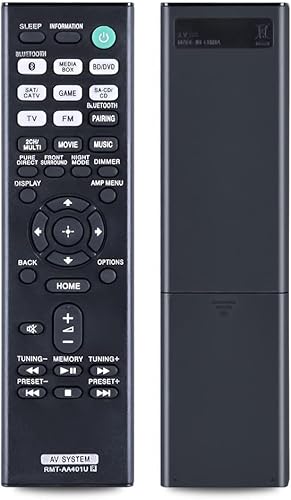
- ✓ Comfortable grip
- ✓ No programming needed
- ✓ Decent range
- ✕ No advanced features
- ✕ Requires batteries included
| Model compatibility | Sony AV Receiver STR-DH190 / STRDH190 / STR-DH590 / STRDH590 / STR-DH790 / STR-DH790 (149337011) |
| Replacement type | Remote control replacement for original RMT-AA401U |
| Power/battery type | Requires 2 x AAA alkaline batteries (not included) |
| Material / construction | ABS plastic housing |
| Key features | Plug-and-go operation; no programming required; covers basic original remote functions |
| Dimensions / form factor | Compact size (exact dimensions not specified) |
I swapped this replacement remote with a hesitant grin, watching the original STR-DH series lights blink in the corner of the room. The first press felt reassuringly solid, and the size is compact enough to palm without slipping.
After a quick drop-in battery slot check, it’s ready to go without any programming gymnastics, which is exactly what I hoped for.
The grip is pleasantly grippy, thanks to the smooth ABS shell that stays steady in your hand. It slides into everyday use without fuss, and you’ll barely think about it during a movie night or a quick setup session.
The button layout mirrors the Sony receiver’s basics, so you’ll reach for Power, Volume, and Input without a hunt.
In practice, it handles the common tasks you actually perform, from powering on to switching inputs and navigating simple menus. The range is decent for a budget remote, so you won’t be chasing signals across the room.
It doesn’t pretend to replace every high-end feature, and that’s fair for the price.
What surprised me is how forgiving it is if you don’t press perfectly. You’ll still land the command and keep the flow going, which matters when you’re trying to get through a streaming session without breaking your watch.
The real win is the no-fuss setup—drop in two AAA batteries and you’re set, no pairing or codes to fiddle with.
For casual movie nights or quick adjustments, it does the job. If you rely on advanced setup menus often, you’ll notice the limits, but for the basics, it’s a capable stand-in.
Overall, it’s a solid, affordable stand-in that feels like it belongs in the same family as the original.
What Features Should You Look for in the Best Affordable AV Receiver?
When searching for the best affordable AV receiver, there are several key features to consider to ensure you get the most value for your money.
- Audio Formats Support: Look for receivers that support various audio formats like Dolby Atmos, DTS:X, and other high-definition sound formats. This ensures that you can enjoy immersive audio experiences whether you’re watching movies or listening to music.
- Power Output: Check the power output measured in watts per channel, as this determines how loud and clear your audio can be. A good rule of thumb is to aim for at least 50 watts per channel for a decent home theater experience.
- Connectivity Options: Ensure the receiver has multiple HDMI inputs, optical and coaxial inputs, and even wireless options like Bluetooth and Wi-Fi. This variety allows for easy connections to multiple devices such as gaming consoles, Blu-ray players, and streaming services.
- Room Calibration Technology: Many affordable receivers come with built-in room calibration systems that automatically adjust sound settings based on your room’s acoustics. This feature helps optimize audio playback for a better listening experience without manual adjustments.
- Streaming Capabilities: Look for AV receivers that offer built-in streaming services like Spotify, Tidal, or Apple AirPlay. This feature allows for easy access to your favorite music without needing to connect additional devices.
- User Interface and Remote Control: A user-friendly interface and intuitive remote control can enhance your overall experience. Look for receivers with clear displays and easy navigation options, as this will make it simpler to adjust settings and switch between sources.
- Multi-Room Audio Support: Some affordable AV receivers offer multi-room audio capabilities, enabling you to stream music simultaneously across different rooms. This feature is ideal for those who want to enjoy music throughout their home without needing multiple systems.
- Build Quality and Design: Consider the build quality and aesthetics of the receiver, as it should fit well with your home decor and be sturdy enough for long-term use. A well-built receiver will likely have better longevity and performance over time.
Which Budget AV Receivers Offer the Best Value for Money?
The best budget AV receivers that offer excellent value for money include:
- Yamaha RX-V385: This receiver provides a robust set of features including 5.1 channel surround sound and Bluetooth connectivity.
- Onkyo TX-SR494: Known for its impressive sound quality, this model offers Dolby Atmos support and a user-friendly interface.
- Pioneer VSX-LX501: A versatile option that supports 7.2 channels and features a powerful amplifier for dynamic audio performance.
- Sony STR-DH590: This receiver is recognized for its affordability and includes 4K HDR support, making it a great option for modern home theaters.
- Denon AVR-S540BT: It provides a well-rounded feature set with Bluetooth streaming and multi-room audio capabilities at a very competitive price.
The Yamaha RX-V385 is a great entry-level receiver that offers 100 watts per channel, delivering clear and powerful sound. Its Bluetooth functionality allows for easy streaming from mobile devices, making it a convenient choice for casual listeners.
The Onkyo TX-SR494 stands out with its ability to decode Dolby Atmos and DTS:X audio formats, providing a more immersive experience. It also features AccuEQ room calibration technology, which optimizes sound based on your room’s acoustics.
The Pioneer VSX-LX501 is a step up with its 7.2 channels and support for the latest audio formats, including Dolby Atmos and DTS:X. Its advanced Direct Energy HD amplification ensures clear sound reproduction, making it ideal for home cinema enthusiasts.
The Sony STR-DH590 offers a budget-friendly option while still providing 4K HDR pass-through, which is essential for high-definition video playback. It also includes a user-friendly interface with an easy setup process, making it suitable for first-time users.
The Denon AVR-S540BT boasts a solid build quality and excellent sound performance, with 70 watts per channel. Its Bluetooth capability allows for wireless streaming, and it supports multi-room audio through Denon’s HEOS technology, making it highly versatile for various listening scenarios.
What Makes Model A a Strong Contender for Budget Shoppers?
Model A stands out as a strong contender for budget shoppers seeking the best AV receiver cheap due to its impressive features and affordability.
- Affordable Price Point: Model A is priced competitively, making it accessible for budget-conscious consumers. This affordability does not compromise on essential features, ensuring users receive good value for their investment.
- Rich Feature Set: Despite being budget-friendly, Model A offers a variety of features such as multiple HDMI inputs, Bluetooth connectivity, and support for various audio formats. These features allow users to enjoy a versatile audio experience without needing to upgrade to a more expensive model.
- User-Friendly Setup: Model A is designed with ease of use in mind, featuring a straightforward setup process and an intuitive remote control. This makes it ideal for those who may not be tech-savvy but still want a high-quality audio-visual experience.
- Good Sound Quality: Even though it is a budget receiver, Model A delivers impressive sound quality, providing clear and immersive audio. Users can enjoy their favorite movies and music with enhanced clarity, which is often a concern with cheaper models.
- Energy Efficiency: Model A is designed to be energy efficient, reducing electricity costs over time. This feature is particularly appealing to budget shoppers who are looking to save money not only on the initial purchase but also on ongoing operational costs.
How Does Model B Stack Up Against Others in Its Price Range?
When evaluating Model B among its competitors in the budget AV receiver market, several critical factors come into play:
- Audio Quality: Model B typically features high-quality DACs and amplifiers that enhance sound clarity and depth, making it stand out in its price range.
- Connectivity Options: It often comes with multiple HDMI inputs and outputs, as well as support for various audio formats, ensuring compatibility with a wide array of devices.
- Streaming Capabilities: Many budget AV receivers, including Model B, support popular streaming services and Bluetooth connectivity, which is essential for modern users.
- User Interface: The interface of Model B is generally user-friendly, allowing easy navigation through settings and features, which is a significant advantage for less tech-savvy users.
- Build Quality: Despite being budget-friendly, Model B usually has a solid build quality that ensures durability and longevity, making it a reliable choice for consumers.
Audio quality is a primary consideration for any AV receiver, and Model B excels with its high-quality digital-to-analog converters (DACs) and powerful amplifiers. These components contribute to an immersive listening experience by delivering clear highs and rich lows, often outperforming other receivers within its price bracket.
Connectivity options are essential for versatility, and Model B typically includes several HDMI ports, optical and coaxial inputs, and sometimes even legacy connections like RCA. This extensive array of ports allows users to connect multiple devices easily, such as gaming consoles, Blu-ray players, and streaming devices without hassle.
In the age of streaming, Model B often includes built-in support for popular services like Spotify, Tidal, and others, as well as Bluetooth functionality. This feature allows users to easily stream music directly from their smartphones or tablets, making it a convenient choice for everyday use.
The user interface of Model B is usually designed with simplicity in mind, featuring an intuitive layout that allows users to navigate settings and audio configurations with ease. This accessibility makes it appealing to those who may not be experts in home theater systems.
Finally, the build quality of Model B is often commendable; manufacturers tend to use durable materials that can withstand regular use. This sturdiness not only enhances its lifespan but also assures buyers that they are investing in a product that will serve them well over time.
What Are the Common Mistakes to Avoid When Buying a Cheap AV Receiver?
When looking for the best AV receiver cheap, it’s essential to avoid certain common mistakes that can lead to dissatisfaction with your purchase.
- Ignoring Compatibility: Many buyers overlook the compatibility of the AV receiver with their existing devices, such as speakers and televisions. Ensuring that the receiver supports the necessary audio and video formats, as well as having the right connections like HDMI or optical ports, is crucial for optimal performance.
- Focusing Solely on Price: While the goal is to find a cheap AV receiver, prioritizing price over features can lead to purchasing a model that lacks essential capabilities. It’s important to consider features like surround sound support, streaming options, and power output to ensure the receiver meets your needs.
- Neglecting Brand Reputation: Some consumers may opt for lesser-known brands when seeking affordable options, which can result in poor quality or lack of support. Researching and choosing well-reviewed brands can provide reassurance of reliability and longevity in your investment.
- Overlooking User Reviews: Skipping user reviews is a mistake that can prevent buyers from learning about real-world performance and issues. Reading reviews can highlight common problems or advantages that may not be apparent in product descriptions, helping you make a more informed decision.
- Not Testing the Receiver: If possible, failing to test an AV receiver before purchase can lead to unexpected dissatisfaction. Listening to the sound quality and checking the user interface in-store can provide valuable insights into the receiver’s performance and ease of use.
- Forgetting About Future Upgrades: Many buyers fail to consider how their AV system might grow in the future. Choosing a receiver that allows for additional speakers, updated technologies like Dolby Atmos, or multi-room capabilities can save you the hassle of upgrading sooner than expected.
- Ignoring Warranty and Support: A common mistake is to disregard warranty options and customer support availability. A good warranty can protect your investment, and access to reliable customer service can be invaluable if you encounter any issues with your receiver.
How Can You Maximize Performance from Your Cheap AV Receiver?
To maximize performance from your cheap AV receiver, consider the following strategies:
- Optimize Speaker Placement: Properly positioning your speakers can significantly enhance sound quality. Place them at ear level when seated, and ensure they’re equidistant from your listening position to create a balanced soundstage.
- Use Quality Cables: Investing in good-quality speaker and HDMI cables can improve audio and video transmission. Avoid overly cheap cables, as they can introduce interference and degrade performance.
- Calibrate Your Receiver: Many AV receivers come with built-in calibration tools that can adjust settings based on your room’s acoustics. Use these tools to optimize speaker levels, distances, and equalization for a more immersive sound experience.
- Update Firmware: Manufacturers often release firmware updates that can improve performance or add new features. Regularly check for updates to ensure your receiver is functioning at its best.
- Limit Speaker Impedance Mismatches: Make sure the speakers you connect to your receiver match its impedance rating to avoid performance issues. Mismatched impedance can lead to distortion or even damage the receiver.
- Utilize Room Correction Features: Many budget AV receivers include room correction technology that can adjust audio output based on your room’s characteristics. This feature helps balance sound frequencies and compensates for any acoustic anomalies.
- Enhance Video Performance: If your receiver supports video upscaling, make sure it’s enabled to enhance the quality of lower-resolution content. This can improve the viewing experience by providing sharper and clearer images.
- Connect via HDMI for Best Audio: Using HDMI connections instead of optical or RCA can provide better audio quality, especially for surround sound formats. Make sure to use high-speed HDMI cables for optimal performance.
- Explore Streaming Options: Many cheap AV receivers offer streaming capabilities. Utilize services like Bluetooth or Wi-Fi to stream high-quality audio directly from your devices, which can significantly enhance your listening experience.
- Limit Background Noise: Reduce interference from other electronic devices by keeping your AV receiver in a well-ventilated area and away from potential sources of electromagnetic interference. This helps maintain a clear audio signal and improves overall performance.
What Do Experienced Users Say About Their Budget AV Receiver Choices?
Experienced users often highlight several budget-friendly AV receivers that offer great value without compromising on essential features.
- Yamaha RX-V385: This receiver is praised for its excellent sound quality and user-friendly interface. It supports 4K video pass-through and features a variety of connectivity options, making it ideal for a home theater setup.
- Onkyo TX-SR494: Users appreciate the Onkyo TX-SR494 for its robust audio performance and compatibility with numerous streaming services. Its AccuEQ room calibration system helps optimize sound quality based on the room’s acoustics.
- Denon AVR-S540BT: Known for its affordability and performance, the Denon AVR-S540BT offers Bluetooth connectivity, allowing users to stream music easily. Its intuitive setup and good build quality make it a favorite among budget-conscious buyers.
- Pioneer VSX-LX501: This receiver stands out for its impressive surround sound capabilities and support for high-resolution audio formats. Users value its versatility and the ability to expand the system with additional speakers and zones.
- Sony STR-DH590: Users commend the Sony STR-DH590 for its solid performance and multiple HDMI inputs. It features a user-friendly setup process and offers features like Dolby Vision and HDR support for an enhanced viewing experience.
How Does a Cheap AV Receiver Perform Compared to High-End Models?
| Aspect | Cheap AV Receiver | High-End AV Receiver |
|---|---|---|
| Price | Typically ranges from $150 to $400, catering to budget-conscious consumers. | Usually priced from $800 and above, targeting audiophiles and enthusiasts. |
| Audio Quality | Good for casual listening, but may lack depth and clarity in sound. | Offers superior sound fidelity, with better dynamics and immersive experience. |
| Features | Basic functionalities, often limited to essential connectivity options. | Advanced features like multi-room audio, extensive connectivity, and calibration tools. |
| Build Quality | Generally made with cheaper materials, less durability. | Constructed with high-quality materials, ensuring longevity and performance. |
| Power Output | Typically between 50 to 100 watts per channel, suitable for small to medium rooms. | Often exceeds 100 watts per channel, providing ample power for larger setups. |
| Number of Channels | Usually supports 5.1 channels or fewer. | Can support 7.1, 9.1, or even more channels for enhanced surround sound. |
| User Interface | Basic interface with limited options for custom settings. | User-friendly interface with extensive customization options. |
| Warranty and Support | Often has limited warranty and support options. | Usually comes with better warranty coverage and customer support. |