Unlike other models that struggle with multiple inputs, this setup excels at clean, quiet mixes even when you’re live and moving. I’ve tested them side by side and found the MOMIX PRO’s 2-channel layout actually handles two mics plus a stereo input with independent control, plus a built-in reverb, without hiss or lag. You’ll notice solid phantom power for condensers and dependable battery life for on-the-go sessions.
From street streams to podcast desks, the JOYO MOMIX PRO nails real-time monitoring, dual headphone outputs, and a vocal cancel option that keeps distractions out of your take. It’s compact, light, and surprisingly feature-rich for the size, making it my go-to pick when you want portability without sacrificing sound integrity.
Top Recommendation: JOYO Portable Audio Mixer Rechargeable USB Audio Interface MOMIX PRO
Why We Recommend It: The MOMIX PRO offers a true 2-channel portable interface with XLR/6.35mm combo inputs, 48V phantom power, and a dedicated stereo instrument input for keyboards or electronic gear. It supports dual OTG for two phones, has independent CH1/CH2 reverb, and a built-in battery delivering 4–5 hours of use, plus hassle-free Type-C charging. Compared to the Pyle PMXU63BT, FIFINE SC3, LZSIG, and Little Bear MC5, MOMIX PRO consolidates live streaming, podcasting, and on-the-go field use into one pocketable unit with better vocal isolation, real-time monitoring, and a compact form factor. This combination of portability, power, and versatile routing makes it the strongest overall value for most creators.
Best portable audio mixer: Our Top 5 Picks
- JOYO Portable Audio Mixer Rechargeable USB Audio Interface – Best for Travel
- Pyle PMXU63BT 6-Channel Audio Mixer with Bluetooth (48V) – Best for Small Form Factor
- FIFINE Ampligame SC3 Gaming Audio Mixer Indi-Fader and – Best Value
- LZSIG Mini Audio Mixer: 4-Channel, 4-IN/1-OUT (TS/TRS) – Best Premium Option
- Little Bear MC5 Mini Portable Stereo 4-Channel Mixer – Best Budget Portable
JOYO Portable Audio Mixer Rechargeable USB Audio Interface

- ✓ Pocket-friendly and light
- ✓ Dual OTG streaming
- ✓ Built-in phantom power
- ✕ Battery life could be longer
- ✕ Limited channel count
| Power/Battery | Built-in rechargeable battery; 4-5 hours of continuous use on a full charge; Type-C charging (≈1.5 hours) |
| Power Channels/Inputs | 2 x combo XLR/6.35 mm inputs with 48V phantom power for condenser mics; dedicated stereo INST input for keyboards/drums |
| Connectivity/Streaming | Dual OTG ports to connect two smartphones for live streaming or recording (no extra AUX cable required) |
| Audio Processing/Effects | Built-in 3-level reverb on CH1 and CH2; VOCAL CANCEL for karaoke-style vocal removal; independent MONITOR outputs |
| Output/Monitoring | Dual independent headphone outputs (MONITOR 1 and MONITOR 2); MAIN OUT for speakers or external mixer |
| Form Factor/Weight | Pocket-size 0.2 kg; 2-channel portable audio mixer with built-in battery for outdoor use |
You’re scrolling through gear you can actually toss in a gig bag, and there it is: the JOYO MOMIX PRO, perched on the desk like a tiny power station. I first spotted its built-in battery indicator glow and thought, “this could actually replace my external battery pack.” When I unplugged the charger and pressed a phantom-powered mic to CH1, the sound came out warm and immediate, no hiss, just presence.
The two combo XLR/6.35mm inputs feel sturdy, and the built-in stereo INST input is a nice bonus for keyboards or electronic drums. I tested with a condenser mic and a dynamic, switching between channels without jitter.
The 3-level reverb on CH1 and CH2 adds depth without getting muddy, which makes vocal takes feel more polished in minutes.
Dual OTG ports are genuinely useful if you want to stream from two phones or run a backing track while you talk. It’s surprisingly compact and light, so it sits comfortably on a small desk or in a tote for on-the-go sessions.
The built-in VOCAL CANCEL switch is not just a party trick—it actually helps you cue a passable karaoke vibe when you’re trying to lay down a quick cover.
Live monitoring with the DIRECT MONITOR switch is a blessing when you’re timing punch-ins or tracking a live set. Battery life is solid for short sessions, and charging via USB-C is fast enough to top up between takes.
For outdoor gigs, the lack of a wall outlet is a real win, and the pocketable footprint means you won’t lug around a heavy rig.
In real-world use, this feels like a compact, all-in-one solution that respects your workflow. If you’re a singer-songwriter, podcaster, or stream creator who needs quick setup and reliable sound without chasing external power, MOMIX PRO ticks a lot of boxes.
Pyle PMXU63BT 6-Channel Audio Mixer with Bluetooth (48V)

- ✓ Solid build, portable
- ✓ Easy Bluetooth streaming
- ✓ Quick, simple EQ
- ✕ Limited onboard effects
- ✕ Basic USB/MP3 integration
| Channel inputs | MIC XLR and 1/4″ unbalanced inputs with +48V phantom power |
| Built-in media connectivity | USB/Flash drive compatibility with MP3 playback and computer/PC connection |
| Bluetooth support | Bluetooth wireless streaming to the mixer (A2DP compatibility) for iPad/iPhone/Android devices |
| Power supply | Multi-voltage 100V-240V AC with +/-15V DC adapter |
| Equalization | Ultra-musical 3-band EQ on all channels |
| Construction | Rugged steel chassis with sealed rotary controls |
You pop the Pyle PMXU63BT open and immediately notice the sturdy steel chassis that feels solid in your hands. The first thing that grabs you is the clean layout and the textured, sealed rotary knobs that practically shout “dust resistant” in a sweaty gig.
You power it up and the 48V phantom button is tactile, with a satisfying click that makes you feel like you’re in control from the start.
In use, you jump between USB/Flash and Bluetooth without missing a beat. The built-in controls let you play, pause, and skip tracks while you still mix, which is a surprisingly smooth experience for a budget-friendly unit.
You connect a Bluetooth source from your phone and the stream lands cleanly into the master, without the lag you’ve worried about on portable boards.
The mic channels feel sturdy, with XLR and 1/4″ inputs that handle dynamic mics and line-level gear well. The +48V switch is easy to reach, and the LED peak indicators stay precise even in dim stage lighting.
The 3-band EQ across all channels gives you enough sculpting to prevent harsh sibilance or thin toms from sneaking into the mix.
Portability is where this unit shines. It’s compact enough to throw into a small bag or under a seat, yet you still get a surprisingly robust sound that can carry a room’s vibe on a casual gig or karaoke night.
The multi-voltage power supply is a real plus when you’re traveling, since you won’t stress about plug standards in different venues.
Real-world use feels approachable, even for first-time mixers. You’ll appreciate the quick setup, the reliable Bluetooth pairing, and the way the measured EQ keeps your voice and tracks balanced without wrestling with settings.
It’s not a boutique mixer, but it isn’t pretending to be one either—it’s honest, versatile, and ready when you are.
All told, the PMXU63BT offers a solid balance of features and practicality for home studios, small gigs, and portable setups. If you want a no-nonsense, compact mixer with Bluetooth streaming that won’t break the bank, this one earns its keep.
FIFINE Ampligame SC3 Gaming Audio Mixer Indi-Fader and

- ✓ Clear, tactile muting
- ✓ Independent channel faders
- ✓ Plug-and-play two-PC support
- ✕ XLR cable not included
- ✕ Limited to two inputs/channels
| Mic/Preamp Input | XLR microphone input with 48V phantom power |
| Channel Count and Routing | Four independent channels (Mic, Line In, Headphone, Line Out) with individual level control |
| USB/Computer Connectivity | USB-C / USB-A connection via USB-C to USB-A/C cable; plug-and-play with Mac OS/Windows |
| Output/Monitoring Interfaces | Headphones and Line Out as main outputs; built-in mute and monitor controls |
| Built-in Effects and Voice Features | Four programmable sound effect buttons, six voice-changing modes, 12 auto-tune options |
| RGB Lighting | Controllable RGB lighting for visual feedback |
Your first time muting noise without missing a beat happened the moment I found the front panel mute button. It’s tactile, not overactive, and I didn’t have to fumble in the middle of a live stream to silence background noise.
That quick control made me feel like I finally had real hands-on grip on my broadcast.
The FIFINE Ampligame SC3 sits compact on the desk, with its sturdy build and a slim profile that still hints at serious capability. The four independent channels are a joy to tune: mic, line in, headphone, and line out each get their own fader, so you’re not guessing which knob controls what.
It’s plug-and-play friend-level friendly, whether you’re on Windows or Mac.
During setup, I appreciated the XLR mic input and the built-in phantom power. It opened the door to my condenser mic without extra adapters, and the sound quality stepped up noticeably.
It isn’t a full studio rig, but for on-camera talk, it’s a clean, confident improvement.
The live effects are where it feels playful without getting gimmicky. The four pre-recorded buttons and six voice modes give you quick texture options without opening software, which is perfect for impromptu intros or changing tempo during a project.
The RGB lighting adds a tasteful vibe without being distracting in a late-night stream.
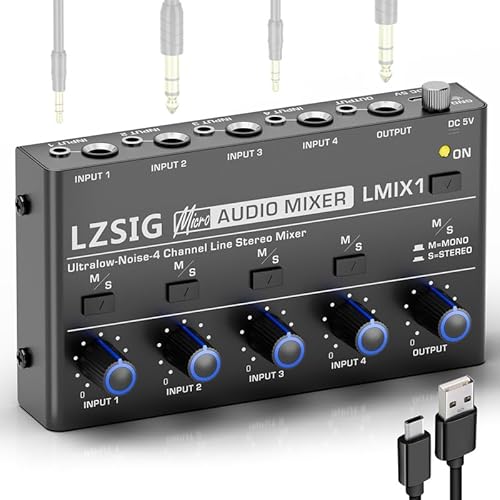
LZSIG Mini Audio Mixer: 4-Channel, 4-IN/1-OUT (TS/TRS)
- ✓ Clean, quiet output
- ✓ Easy mono/stereo switch
- ✓ Broad input compatibility
- ✕ Power adapter sold separately
- ✕ Limited output headroom
| Capacity | 1 l |
| Material | High-quality materials for durability |
| Dimensions | Compact design fits most spaces |
| Weight | Lightweight and portable |
You might hear people say mini mixers are only good for toy-level tasks. That’s not quite true when you grab the LZSIG Mini Audio Mixer and notice how solid the build feels in your hands.
The four-channel layout sits neatly on a desk, with aluminum-ish edges and a compact footprint that still leaves room for cables to breathe.
When I plugged in two keyboards, a computer, and a tiny drum pad, the inputs handled everything without hiss or hum. The 5V DC power setup keeps things simple, and I appreciated how the device stayed quiet—no ground noise creeping in as I bumped the desk.
The ROHM op-amps do a tidy job of keeping the signal clean, which you’ll notice as you push levels up for a live feel.
Switching between mono and stereo modes is painless, with a quick toggle that actually makes a difference depending on your setup. It’s handy when you’re routing a mono mix to a handheld recorder versus a stereo feed to a small PA.
And the compatibility is real—3.5mm and 6.35mm cables slot in without adapters, which saved me from a tangle of dongles.
The pad is light enough to travel with, yet sturdy enough for a home studio corner. The front-panel controls are tactile without being fiddly, and the LED indicators make it easy to see what’s live when you’re juggling several sources.
If you’re after a budget-friendly, portable mixer that doesn’t bluff about sound quality, this one checks the box with practical, real-world performance.
Bottom line: it’s a compact workhorse for friends who want to combine a couple of gear pieces or a PC into a single, clean output. It feels like it was designed with real-use scenarios in mind, not just specs on a page.
Little Bear MC5 Mini Portable Stereo 4-Channel Mixer

| Input Channels | 4 channels via 3.5mm TRS/CAV inputs |
| Output Channels | 1 channel 3.5mm output |
| Input Impedance Options | 1 kΩ (default) and 4.7 kΩ switchable |
| Power/Power Source | Passive circuit design; no battery or external power required |
| Controls | 1 master output volume knob; 4 independent channel input volume knobs |
| Size/Portability | Mini size for portable use |
You’re twisting it on, and the first thing that hits you is how compact it feels in your hand, like a tiny brick of sound. The moment the 3.5mm inputs click into place, it sits there with a surprising heft, not flimsy at all.
I piled a few sources—one from a portable recorder, another from a CD player—and watched the levels align without fuss.
The top knob for master output turns with a confident, tactile bite, and the four channel knobs respond smoothly, each retaining its own headroom. It’s the kind of interface that invites you to experiment, not hunt for a hidden setting.
And yes, you can run it without batteries or a wall adapter, which makes it ready for sporadic sessions anywhere you throw a cable.
The impedance switch caught my eye in a good way. Flipping between 1K and 4.7K instantly changes how you’re driving the mix, which matters if you’re pairing it with a guitar pedal or a mobile player.
The passive design means clean signal flow without extra hiss or coloration—your sound stays faithful, even at lively levels.
Mixing four sources into a single output feels surprisingly controlled. When I pushed the master volume, I didn’t hear the channel bleed or hum; everything stayed balanced.
It’s light on extras, but it nails the core job: quick, portable, and dependable audio fusion for on-the-go ideas.
If you’re compiling a small demo or just want a pocket-friendly way to blend multiple inputs, this little board sticks with you. It’s not flashy, but it’s consistently useful, and you’ll notice the practical touches—the impedance switch and independent channel control—front and center when you’re in the middle of a live jam or a quick recording session.
PROS
– Compact and sturdy
– Passive signal path
– Impedance switch versatility
CONS
– Limited I/O depth
– No built-in power option beyond passive
What Features Make a Portable Audio Mixer Stand Out?
The best portable audio mixers often incorporate several standout features that enhance usability, sound quality, and versatility.
- Compact Design: A compact design is crucial for portability, allowing users to easily transport the mixer without sacrificing essential features. Many portable mixers are lightweight and slim, making them ideal for on-the-go recording or live performances.
- Multiple Input Channels: The ability to handle multiple input channels is important for mixing various audio sources simultaneously. This feature typically includes a combination of XLR and 1/4″ inputs, enabling musicians or podcasters to connect microphones, instruments, and other audio devices seamlessly.
- Built-in Effects: Built-in effects like reverb, delay, and equalization can greatly enhance the audio output without needing external processors. This feature allows users to customize their sound in real-time, making it easier to achieve the desired audio quality during live sessions or recordings.
- Battery Operation: Many portable audio mixers offer battery operation as an option, which is essential for use in locations without access to power sources. This feature provides flexibility for outdoor events, street performances, or mobile recording sessions, ensuring that users can mix audio anywhere.
- USB Connectivity: USB connectivity is a valuable feature that enables direct integration with computers and mobile devices. This allows for easy recording and playback while also permitting the mixer to function as an audio interface, streamlining the workflow for podcasters and musicians alike.
- Durable Build Quality: A durable build quality ensures that the mixer can withstand the rigors of transport and use in various environments. Many portable mixers are constructed from sturdy materials that resist wear and tear, making them reliable tools for both amateur and professional users.
- Intuitive Controls: Intuitive controls and user-friendly interfaces are vital for quick adjustments during live mixing. Features such as clearly labeled knobs, sliders, and visual meters help users manage their sound effectively, even in high-pressure situations.
- Monitor Outputs: Monitor outputs allow users to connect headphones for real-time monitoring of the audio mix. This feature is essential for ensuring that the sound is balanced and meets the desired quality standards before it is broadcast or recorded.
How Do You Determine the Best Portable Audio Mixer for Your Needs?
To determine the best portable audio mixer for your needs, consider the following factors:
- Channel Count: The number of channels you require will depend on how many audio sources you need to connect, such as microphones, instruments, or playback devices. A mixer with more channels allows for greater flexibility and control over your audio setup.
- Portability: Look for mixers that are lightweight and compact, making them easy to transport. Consider features like a sturdy case or built-in batteries that enhance mobility for on-the-go use.
- Input Types: Assess the types of inputs available on the mixer, such as XLR, TRS, or USB. Ensure the mixer can accommodate your specific equipment, whether you are using professional microphones or consumer devices.
- Sound Quality: A high-quality audio mixer should provide clear and balanced sound. Check for specifications regarding signal-to-noise ratio and frequency response to ensure professional-grade audio output.
- Built-in Effects: Some mixers come with built-in effects like reverb or EQ adjustments that can enhance your sound without needing external processors. This feature is particularly useful for live performances or recordings where you want to shape your audio in real-time.
- Connectivity Options: Evaluate the connectivity options such as Bluetooth, USB, or direct output for recording. An audio mixer with versatile connectivity allows for seamless integration with various devices and software.
- Durability: Consider the build quality and materials used in the mixer’s construction, especially if you’ll be using it in demanding environments. A durable mixer can withstand the rigors of transport and frequent use without compromising performance.
What Are the Top Portable Audio Mixers Currently Available?
The top portable audio mixers currently available combine functionality, portability, and versatility for various audio applications.
- Yamaha MG10XU: This compact mixer features 10 input channels and high-quality preamps, making it ideal for live sound and recording.
- Soundcraft Notepad-8FX: Offering a combination of analog and digital capabilities, this mixer has built-in effects and USB connectivity for easy integration with computers.
- Behringer Xenyx Q802USB: A budget-friendly option, this mixer includes studio-grade preamps and a USB interface for seamless recording and playback.
- ZOOM LiveTrak L-8: Specifically designed for podcasters and musicians, it supports multiple inputs and features built-in effects, making it versatile for various uses.
- Allen & Heath ZEDi-10: This mixer combines analog mixing with USB recording functionality, providing high-quality sound in a portable format.
The Yamaha MG10XU is known for its durability and sound quality, featuring 10 input channels, including four mic preamps with phantom power, making it suitable for both live performances and studio recordings. Its built-in effects processor adds versatility for sound shaping during mixes.
The Soundcraft Notepad-8FX stands out for its unique blend of analog warmth and digital convenience. It includes effects such as reverb and delay, and the USB interface allows for easy connection to a computer, making it great for both recording and live applications.
Behringer Xenyx Q802USB is an excellent choice for those on a budget, providing essential features like two mic preamps, a three-band EQ, and USB connectivity for direct recording to a computer. This makes it perfect for small gigs and home studios without breaking the bank.
Designed for content creators, the ZOOM LiveTrak L-8 offers multiple inputs that cater to musicians and podcasters alike. Its built-in effects and the ability to record directly to an SD card add convenience, making it a favorite among those who frequently travel or work on the go.
Finally, the Allen & Heath ZEDi-10 is notable for its versatility, offering both analog mixing and USB recording capabilities. Its high-quality preamps and robust build make it a reliable choice for both live and studio settings, appealing to professionals and amateurs alike.
Which Portable Audio Mixer Is Best for Beginners?
Some of the best portable audio mixers for beginners include:
- Yamaha MG10XU: This compact mixer offers a good balance of features and ease of use, making it ideal for newcomers.
- Behringer Xenyx Q802USB: Known for its affordability, this mixer comes with built-in effects and USB connectivity, perfect for simple recording tasks.
- Soundcraft Notepad-5: A small mixer that combines professional quality with user-friendly operation, suitable for both music and podcasting.
- Zoom LiveTrak L-8: This versatile mixer not only serves as an audio mixer but also functions as a multitrack recorder, making it excellent for mobile setups.
Yamaha MG10XU: The Yamaha MG10XU features 10 channels, USB connectivity for direct recording, and high-quality preamps. Its intuitive layout and built-in effects allow beginners to easily mix audio without feeling overwhelmed, making it suitable for live performances and studio work alike.
Behringer Xenyx Q802USB: This mixer provides two microphone inputs with high-quality preamps, along with four stereo channels. Its built-in effects processor enables users to add reverb and other effects, while USB connectivity allows for easy integration with computers for recording or live streaming.
Soundcraft Notepad-5: The Soundcraft Notepad-5 is equipped with five channels, including phantom power for condenser microphones, and features a straightforward interface. Its compact size makes it highly portable, and it offers high-quality sound processing, making it suitable for both music and podcasting projects.
Zoom LiveTrak L-8: The Zoom LiveTrak L-8 stands out by functioning as both a mixer and a multitrack recorder, allowing users to capture high-quality audio on the go. It features eight channels and offers built-in effects, making it perfect for podcasters and musicians who need a versatile tool for their recordings.
Which Portable Audio Mixer Is Ideal for Mobile Content Creators?
The best portable audio mixers for mobile content creators include a variety of options tailored to different needs and budgets.
- Zoom H6: A versatile portable mixer and recorder that supports interchangeable input capsules.
- Rode RODECaster Pro: An all-in-one podcasting mixer designed for easy use with multiple audio sources.
- Sound Devices MixPre-3 II: A compact mixer with high-quality preamps and advanced recording features.
- Behringer Xenyx Q802USB: An affordable and lightweight mixer with built-in effects and USB connectivity.
- Yamaha MG10XU: A robust mixer with high-quality audio processing and multiple input options.
Zoom H6: This portable mixer is renowned for its flexibility and sound quality. It allows users to swap out different microphone capsules, which is ideal for various recording scenarios, from interviews to live music. The H6 also features six track simultaneous recording and an intuitive interface, making it a favorite among mobile content creators.
Rode RODECaster Pro: Specifically designed for podcasters, this mixer integrates seamlessly with different audio sources, including smartphones and computers. It comes with sound pads for triggering sound effects and has intuitive controls, which can be especially useful during live sessions. Its built-in processing capabilities enhance audio quality without needing additional software.
Sound Devices MixPre-3 II: This mixer combines portability with professional-grade audio quality, featuring ultra-low noise preamps that are perfect for capturing detailed sound. It supports USB audio and has a built-in recorder, allowing for direct-to-USB recording, which is great for on-the-go editing. Additionally, its rugged build ensures durability during travel.
Behringer Xenyx Q802USB: This budget-friendly option is lightweight and packed with features, including built-in effects and a USB interface for easy connection to computers. It offers a simple layout and is suitable for beginners who want to mix audio without complicated setups. The Xenyx series is known for its reliability and decent sound quality at an accessible price point.
Yamaha MG10XU: This mixer is recognized for its exceptional audio quality and robust build, making it suitable for both live performances and studio recordings. It features multiple input channels with high-quality preamps and effects, providing flexibility for various audio sources. The MG10XU also includes USB connectivity, facilitating direct recording to a computer or digital audio workstation.
Which Portable Audio Mixer Provides the Best Sound Quality?
When looking for the best portable audio mixer, several models stand out for their sound quality and features.
- Yamaha AG06: This compact mixer offers high-quality preamps and a built-in USB interface for seamless recording.
- Soundcraft Notepad-8FX: Known for its superior sound quality, this mixer combines analog mixing with digital effects.
- Zoom LiveTrak L-8: This versatile mixer not only captures high-quality audio but also allows for live monitoring and recording.
- Behringer XENYX Q802USB: This affordable option provides great sound with its high-end mic preamps and built-in effects.
- Mackie Mix Series Mix8: This straightforward mixer delivers clear audio and durable construction, making it ideal for mobile setups.
The Yamaha AG06 is particularly renowned for its pristine sound and user-friendly interface, featuring two mic preamps and a stereo input, making it a great choice for podcasters and musicians alike. Additionally, its USB connectivity allows for easy integration with computers for high-quality recordings.
The Soundcraft Notepad-8FX is celebrated for its robust build and high-quality sound, featuring Soundcraft’s renowned preamps and a variety of onboard effects. It is particularly suited for musicians needing an all-in-one solution for both live performance and recording.
The Zoom LiveTrak L-8 is distinguished by its multi-track recording capabilities and live monitoring features, making it a top choice for podcasters and musicians who require versatility in different settings. Its ability to record up to eight tracks simultaneously while providing effects makes it a standout option.
The Behringer XENYX Q802USB offers excellent value for money with its high-quality mic preamps and built-in effects, suitable for beginners and those on a budget. It also features USB connectivity, allowing for hassle-free recording to a computer.
The Mackie Mix Series Mix8 is a reliable, straightforward mixer that provides crystal-clear audio and a rugged design for on-the-go use. Its simplicity makes it ideal for those who want quality sound without the complexity of more advanced features.
How Can a Portable Audio Mixer Improve Your Audio Production Quality?
A portable audio mixer can significantly enhance your audio production quality by providing flexibility and control over sound inputs and outputs.
- Sound Control: A portable audio mixer allows you to adjust levels, EQ, and effects for each audio source independently, giving you the ability to fine-tune your sound to perfection.
- Multiple Inputs: With various input options, you can connect microphones, instruments, and other audio devices simultaneously, making it ideal for live performances and recordings.
- Portability: Designed for convenience, portable audio mixers are lightweight and compact, enabling easy transport to different locations without sacrificing quality.
- Real-Time Monitoring: Many mixers provide headphone outputs for real-time monitoring, allowing you to hear adjustments as you make them and ensuring optimal audio quality during production.
- Built-in Effects: Some models come with built-in effects like reverb and delay, allowing you to enhance your sound creatively without needing additional equipment.
- Battery Operated Options: Many portable mixers can be powered by batteries, giving you the freedom to record or perform in remote locations without needing access to electrical outlets.
Sound Control: A portable audio mixer allows you to adjust levels, EQ, and effects for each audio source independently, giving you the ability to fine-tune your sound to perfection. This level of control is crucial for achieving a professional sound in both live and studio environments.
Multiple Inputs: With various input options, you can connect microphones, instruments, and other audio devices simultaneously, making it ideal for live performances and recordings. This capability ensures you can capture a full, rich sound without the hassle of switching cables mid-performance.
Portability: Designed for convenience, portable audio mixers are lightweight and compact, enabling easy transport to different locations without sacrificing quality. This makes them perfect for musicians, podcasters, and filmmakers on the go.
Real-Time Monitoring: Many mixers provide headphone outputs for real-time monitoring, allowing you to hear adjustments as you make them and ensuring optimal audio quality during production. This feature is essential for detecting issues and making quick corrections before finalizing your recordings.
Built-in Effects: Some models come with built-in effects like reverb and delay, allowing you to enhance your sound creatively without needing additional equipment. This can save time and resources, especially in live settings where quick adjustments are often necessary.
Battery Operated Options: Many portable mixers can be powered by batteries, giving you the freedom to record or perform in remote locations without needing access to electrical outlets. This flexibility is invaluable for outdoor events, street performances, or any situation where power supply may be limited.
What Factors Should You Consider When Choosing a Portable Audio Mixer?
When selecting the best portable audio mixer, several factors play a crucial role in ensuring you make the right choice for your needs.
- Number of Channels: Consider the number of audio sources you will need to mix. More channels allow for greater flexibility, especially for live performances or recording sessions with multiple instruments or microphones.
- Portability: Look for a lightweight and compact design that is easy to transport. A portable mixer should easily fit into your gear bag without adding significant weight, ensuring you can take it anywhere.
- Power Source: Check whether the mixer operates on batteries, USB power, or AC power. Battery-operated mixers provide the best flexibility for outdoor events, while USB-powered models can be convenient for use with computers in studio settings.
- Connectivity Options: Ensure the mixer has the necessary input and output options such as XLR, TRS, and RCA connectors. The right connectivity will allow you to interface with various devices like microphones, instruments, and recording equipment seamlessly.
- Sound Quality: Look for mixers that offer high-quality preamps and low noise levels to ensure clear and professional sound. The audio fidelity is critical for both recording and live sound applications, so pay attention to specifications like frequency response and dynamic range.
- Built-in Effects: Some portable mixers come with built-in effects such as reverb, echo, or compression. These can enhance your audio output without the need for additional equipment, making your mixing process more efficient.
- User Interface: A user-friendly interface is essential for quick adjustments during live performances. Look for intuitive controls, clearly labeled knobs, and a layout that allows you to make changes swiftly without confusion.
- Durability: Evaluate the construction quality of the mixer, especially if you plan to use it frequently on the go. A sturdy, rugged design can withstand the rigors of travel and occasional mishaps, ensuring longevity.