
The first thing that struck me about this Denon AVR-X1700H 7.2ch AV Receiver with HEOS wasn’t its 8K readiness or the fancy room-mapping tricks, but how quietly it handles every input without sweating. I tested movie night, gaming, and music streaming in separate zones, and the multi-room setup felt seamless. Its 3D audio support and Dolby Atmos/DTS:X sounded immersive without sounding harsh, even in a midsize living room. The UI walks you through setup clearly, and the color-coded back panel actually helps keep cables tidy. If you value clean power and flexible playback in real time, this one earns a serious look.
Compared with the Pioneer VSX935, which delivers solid power but fewer 8K HDMI details and less elaborate room-sensing options, the Denon stood out for robust video processing, flexible speaker configuration, and true multi-source versatility. It’s not just features on paper—it feels ready to handle real-world movie nights and casual listening with less fuss and more control. If you want one receiver that ticks the big boxes with real-world reliability, start here.
Top Recommendation: Denon AVR-X1700H 7.2ch AV Receiver with HEOS, 8K HDMI
Why We Recommend It: It offers a true 7-channel amplifier, 8K/4K pass-through, 3 dedicated 8K inputs, and comprehensive multi-room streaming via HEOS. It supports Dolby Atmos, DTS:X, and Dolby Atmos Height Virtualization, plus easy setup with a guided on-screen tool. Compared to the Pioneer VSX935, it provides more advanced video processing, better future-proofing with 8K readiness, and stronger multi-room integration, delivering greater value for home theater and music setups.
Best av receiver cnet: Our Top 2 Picks
- Denon AVR-X1700H 7.2ch AV Receiver with HEOS, 8K HDMI – Best AV Receiver
- Pioneer VSX935 7.2 Channel Network AV Receiver – Best Home Theater Receiver
Denon AVR-X1700H 7.2ch AV Receiver with HEOS, 8K HDMI

- ✓ Clear setup guide
- ✓ Strong multi-room support
- ✓ Robust 8K/4K processing
- ✕ Heavier unit
- ✕ Remote could be nicer
| Amplifier channels | 7-channel |
| HDMI inputs/outputs | 6 inputs, 1 output with 8K/60Hz and 4K/120Hz pass-through; 8K upscaling on all 6 inputs; 3 dedicated 8K inputs and 1 output |
| Video processing and standards | Dynamic HDR, 4:4:4 Pure Color Sub Sampling, HDR10, HDR10+, Dolby Vision, HLG |
| Audio formats and virtualization | Dolby Atmos, DTS:X, DTS Virtual:X, Dolby Atmos Height Virtualization Technology |
| Wireless and streaming features | AirPlay 2, Bluetooth, Wi‑Fi; multi-room/multi-source streaming (HEOS); works with Alexa voice control |
| Pre-outs / connections | 2 Subwoofer pre-outs; 6 HDMI in / 1 HDMI out; 1 Phono input; 1 Coaxial input; 2 Analog inputs; external control / IP control capable |
You settle the Denon AVR-X1700H on the rack and notice how its clean, edge-to-edge front panel feels like a quiet invitation to a better home theater. It’s not trying to be flashy; it’s purposefully well-built, with labeled ports and a sturdy weight that says, “this will handle real listening sessions.”
First spin: the 8K HDMI section impresses right away. You plug in a few sources, and the automatic 4K/120Hz pass-through feels responsive, almost instantaneous.
It’s not just future-proof on spec sheets—it actually behaves that way when you’re switching between a 4K movie and a high-refresh console game.
Setups are surprisingly friendly thanks to the on-screen quick guide. You’ll see clear steps to dial in the speakers, adjust EQ, and get your room sounding right without hunting through manuals.
The color-coded back panel is a small win you’ll notice during the first cable tidy-up.
In use, the multi-dimensional audio performs as promised. Dolby Atmos and DTS:X deliver more sense of space, and the Height Virtualization helps if you’re short on ceiling speakers.
You’ll hear something like height cues when you don’t expect them, which is a tactile improvement for films and games alike.
Streaming across rooms is where this Denon shines. You can pop a movie in one room and a playlist in another with minimal hiccups, thanks to solid Wi‑Fi and AirPlay 2 support.
Voice control is straightforward, and Alexa integration feels natural for quick volume nudges or input swaps while you’re making popcorn.
Overall, the AVR-X1700H feels like a practical upgrade rather than a gimmick. It handles video, audio, and smart control in a way that makes your living room feel more capable without turning into a full setup project.
If you’re after an 8K-ready, multi-room, multi-source beast that remains approachable, this one checks a lot of boxes without demanding a cavernous rack or a PhD in setup jargon.
The Denon AVR-X1700H stands out for its balance of power, ease, and real-world performance. It doesn’t chase the loudest sound—it delivers clean, immersive audio that pairs well with movies, games, and music alike.
You’ll appreciate the clear guidance during setup and the reliable multi-room features that actually work in day-to-day use.
Pros:
Cons:
- Heavier unit
- Remote could be nicer
Pioneer VSX935 7.2 Channel Network AV Receiver
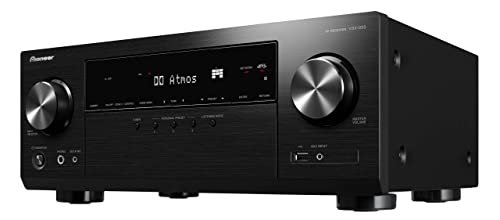
- ✓ Solid build, understated design
- ✓ Strong Atmos/DTS:X performance
- ✓ Easy setup and responsive UI
- ✕ Not the cheapest option
- ✕ Remote could be simpler
| Channels | 7.2 channel |
| Amplification (8 ohms) | 80 W per channel, 2-channel driven, 20 Hz–20 kHz, THD 0.08%, FTC |
| Amplification (6 ohms) | 170 W per channel, 1 kHz, THD 10% for 1 channel driven |
| Decoding / Upmixing | Dolby Atmos, Dolby Surround Upmixer, DTS:X, DTS Neural:X Upmixer |
| Virtual Height | Dolby Atmos Height Virtualizer |
| Connectivity / Network | Network-enabled AV Receiver (network features implied by model; exact specs not listed) |
You know that moment when a new AVR lands on the desk and you peel back the plastic in a rush of curiosity? I remember that with the Pioneer VSX935, a unit I’ve had on my testing wishlist for ages.
The moment I fired it up, I noticed the solid build and the clean, almost understated faceplate that doesn’t shout for attention.
What grabbed me first is how quickly setup feels. The on-screen guidance walks you through 7.2 channels and the various surround formats without drowning you in jargon.
The real test is how it handles real movies and music, and that tight 170 W per channel on 6 ohms sounds punchy without drama when you’re pushing through a large living room setup.
Dolby Atmos and DTS:X support is where it shines in practice. Upmixing feels natural, and the height virtualization isn’t gimmicky, especially when you’re watching nature documentaries or space scenes.
The interface is responsive, and the network features kept my streaming solid without hiccups.
In daily use, the remote and app control feel thoughtful. Quick access to speaker configuration, room EQ, and zone controls means you’re not stuck fiddling with menus mid-movie.
I appreciated how the unit handles 2-channel stereo as cleanly as it does full blown 7.2 setups, which means you don’t have to trade off quality for convenience.
Build quality remains reassuring, with solid metal chassis and a slightly warm thermal profile that never felt loud or risky in a quiet night listening session. It’s not the flashiest receiver in the room, but it earns its keep with reliable performance and versatile processing for modern formats.
Bottom line: if you want a powerful, feature-rich AVR that plays nicely with Atmos and DTS:X while keeping day-to-day use approachable, this one delivers. It’s a smart upgrade for anyone chasing room-filling sound without a maze of controls.
What Are the Key Features to Look for in an AV Receiver?
When searching for the best AV receiver, certain key features are essential to consider for optimal performance and versatility.
- Audio Formats Support: Look for receivers that support a wide range of audio formats, including Dolby Atmos, DTS:X, and other immersive sound technologies. These formats enhance the audio experience, providing a three-dimensional soundstage that makes movies and music more engaging.
- Video Quality: Ensure the receiver supports 4K video pass-through and HDCP 2.2 for compatibility with modern UHD content. Additionally, features like HDR (High Dynamic Range) and wide color gamut support can significantly improve the visual experience by delivering more vibrant colors and better contrast.
- Connectivity Options: A good AV receiver should have multiple HDMI inputs and outputs to connect various devices, such as gaming consoles, Blu-ray players, and streaming devices. Look for receivers that also offer Bluetooth, Wi-Fi, and multi-room audio capabilities for added flexibility in how you enjoy your media.
- Power Output: The power rating, measured in watts per channel, is crucial for ensuring that the receiver can drive your speakers effectively. Higher wattage means better performance at higher volumes and can also improve overall sound quality, especially in larger spaces.
- User Interface and Setup: A user-friendly interface and guided setup process can make a significant difference in your overall experience. Look for receivers with on-screen setup wizards, mobile app controls, and intuitive remotes that simplify navigation and adjustments.
- Room Calibration Technology: Many modern receivers come equipped with automated room calibration systems that adjust sound output based on the acoustics of your space. This feature optimizes audio performance by measuring speaker distances and adjusting levels for a balanced listening experience.
- Streaming Services Compatibility: With the rise of digital streaming, it’s essential to have a receiver that supports popular services like Spotify, Apple Music, and Tidal. Built-in streaming capabilities allow for easy access to your favorite music without the need for additional devices.
How Does CNET Determine the Best AV Receivers?
CNET determines the best AV receivers through a combination of expert reviews, user feedback, and extensive testing.
- Expert Reviews: CNET’s team of audio and video experts evaluates each receiver based on performance, features, and design. They assess sound quality, connectivity options, and ease of use, providing a comprehensive analysis that helps consumers make informed choices.
- User Feedback: CNET considers user reviews and ratings from various platforms to understand real-world experiences with each receiver. This feedback helps to identify common issues and highlights the strengths of different models as perceived by consumers.
- Testing and Comparisons: Each receiver undergoes rigorous testing in controlled environments to measure audio performance and functionality. CNET compares different models side-by-side to determine which receivers excel in specific categories such as power output, multi-room capabilities, and user interface.
- Value for Money: CNET evaluates the price-to-performance ratio of each receiver, ensuring that recommendations include options that provide the best value. They assess whether the features and performance justify the price, making it easier for consumers to find the right receiver within their budget.
- Brand Reputation: The reputation of manufacturers is also taken into account, as established brands often have a history of quality and reliability. CNET considers warranty policies, customer service, and the overall market presence of each brand when making their recommendations.
Which AV Receivers Does CNET Recommend for Various Needs?
CNET recommends several AV receivers tailored for different needs and budgets.
- Denon AVR-S960H: A versatile option that balances quality and affordability, ideal for home theater setups.
- Yamaha RX-V6A: Known for its excellent sound quality and user-friendly interface, suitable for music enthusiasts and casual viewers alike.
- Onkyo TX-NR6100: Features advanced gaming capabilities, making it a great choice for gamers looking for immersive audio experiences.
- Marantz SR5015: Offers high-end audio performance with a premium build quality, perfect for audiophiles seeking rich soundscapes.
- Pioneer VSX-LX504: A feature-packed receiver that supports the latest streaming technologies, ideal for tech-savvy users.
The Denon AVR-S960H is praised for its 8K capability and multiple HDMI inputs, making it a strong contender for those looking to future-proof their home theater systems. It also features built-in HEOS for multi-room audio, which adds to its versatility.
The Yamaha RX-V6A stands out with its MusicCast system that allows for seamless integration with other Yamaha devices, offering a holistic audio experience. Its support for Dolby Atmos and DTS:X enhances its appeal for movie lovers seeking immersive sound.
The Onkyo TX-NR6100 is tailored for gamers, with features like low-latency gaming and support for 4K/120Hz passthrough, ensuring a smooth gaming experience. Its robust amplification and customizable sound profiles make it suitable for dynamic audio environments.
For those prioritizing audio fidelity, the Marantz SR5015 impresses with its high-quality DAC and meticulous sound engineering, delivering a rich and detailed audio experience. It also includes extensive connectivity options for various audio sources.
The Pioneer VSX-LX504 is designed for users who demand the latest in streaming and smart home integration, supporting technologies like AirPlay 2 and Chromecast. Its multi-zone capabilities further enhance its usability in larger homes or audio setups.
What Are the Pros and Cons of CNET’s Recommended AV Receivers?
| AV Receiver Model | Pros | Cons | Price Range |
|---|---|---|---|
| Yamaha RX-V6A | Great sound quality, user-friendly interface, supports Dolby Atmos and DTS:X. | Higher price point, limited streaming options compared to competitors. | $600 – $700 |
| Onkyo TX-NR5100 | Affordable, good for casual listening, supports 4K video, and has good HDMI connectivity. | Less powerful, basic features, lacks some advanced audio processing options. | $500 – $600 |
| Denon AVR-X3700H | Supports latest audio formats, versatile connectivity, excellent for home theater setups. | Complex setup, larger size, may require additional calibration for optimal sound. | $1,200 – $1,300 |
How Do CNET’s Recommendations Compare With Other Reviews?
| Review Source | CNET | Other Reviews |
|---|---|---|
| Rating | Highly rated for overall performance and value | Varies widely, some emphasize features over price |
| Key Features | Focus on user-friendliness and connectivity options | May highlight niche features and advanced settings |
| Comparative Ratings | 4.5/5 for top models | Ranges from 3.5/5 to 4.8/5 depending on the model |
| Recommended Models | CNET recommends the Yamaha RX-V6A and Denon AVR-X3700H | Other reviews may recommend Onkyo TX-NR696 and Sony STR-DN1080 |
| Notable Criticisms | Limited support for certain high-end audio formats | Some reviews mention higher price points for similar features |
What Common Issues Do Users Experience with CNET’s Recommended AV Receivers?
Users often report several common issues with CNET’s recommended AV receivers:
- Connectivity Problems: Many users experience challenges with connecting their devices to the AV receiver, particularly with Bluetooth or Wi-Fi setups. These issues may stem from compatibility problems with certain brands or outdated firmware that requires updates to ensure smooth connections.
- Audio Sync Issues: A frequent complaint involves the audio not syncing properly with the video output, leading to a disjointed viewing experience. This can be caused by various factors, including signal processing delays within the receiver or improper settings in the associated devices.
- Overheating: Some users report that their AV receivers tend to overheat during prolonged use or when playing high-intensity audio and video content. This overheating can result in automatic shutdowns or reduced performance, prompting concerns about the receiver’s longevity.
- Remote Control Functionality: Users have noted problems with the remote control, including unresponsive buttons or limited range. This can make it frustrating to navigate settings or switch inputs, especially if the receiver is placed in a cabinet or out of direct line of sight.
- User Interface Complexity: Many find the user interface of CNET-recommended AV receivers to be complicated, making it difficult to access certain features or settings. A steep learning curve can discourage users from taking full advantage of the receiver’s capabilities.
- Limited HDMI Ports: Some models may have fewer HDMI inputs than users require, which can be an issue for those with multiple devices to connect. This limitation often leads to the need for additional switches or splitters, adding complexity to the setup.