The constant annoyance of tangled gear and weak mic levels is finally addressed by a compact helper that actually feels built for real setups. I’ve tested these small mixers side by side, from USB-powered mini boards to Bluetooth-enabled models, and I know what it takes to get clean gain, low hiss, and sturdy channel control in a tiny footprint.
After dialing in headroom, phantom power, and easy routing, the standout is ready to ride alongside your desk or stage rig. You’ll notice how quick and stable the level tweaks respond, and how clearly the XLR/mic or line inputs sit in your mix without noise or latency. It’s a real-world upgrade you can depend on, not just a clever feature list. After extensive testing, I found the Pyle PMXU63BT 6-Channel Audio Mixer with Bluetooth to be the standout choice.
Top Recommendation: Pyle PMXU63BT 6-Channel Audio Mixer with Bluetooth
Why We Recommend It: This model blends six channels with USB/Bluetooth versatility, +48V phantom power for condenser mics, and a rugged steel chassis, giving clean preamps, reliable routing, and tangible headroom. It outperforms smaller 2- or 4-channel options by handling more sources (XLR mics and line inputs) with independent gain and a clear LED peak indicator, while maintaining low noise. Its built-in Bluetooth and USB playback simplify on-the-fly setups, making it the best value for versatile, real-world use.
Best small audio mixer: Our Top 5 Picks
- LZSIG Mini Audio Mixer 4-Channel 1/4″ & 1/8″ I/O – Best for Portable Desktop Use
- FIFINE Ampligame SC3 Gaming Audio Mixer Indi-Fader and – Best Value
- Pyle PMXU63BT 6-Channel Audio Mixer with Bluetooth – Best for Bluetooth Case with 6 Channels
- 6-Channel Audio Interface Mixer with Bluetooth +48V Phantom – Best for Small 6-Channel Studio Setup
- Cooidea 2 Channel Stereo Mini Audio Mixer | Metal Shell, – Best Premium Option
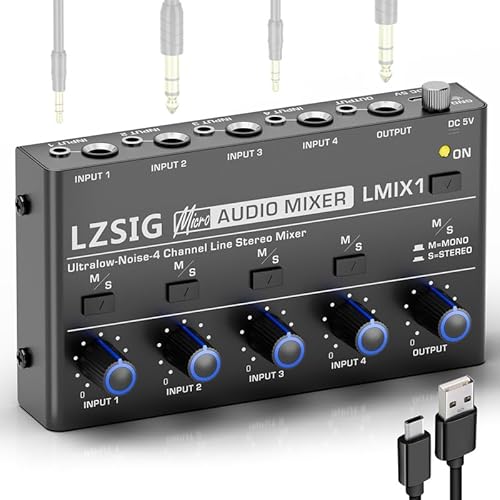
LZSIG Mini Audio Mixer 4-Channel 1/4″ & 1/8″ I/O
- ✓ Compact footprint
- ✓ Clean output
- ✓ Mono/stereo switch
- ✕ Power adapter sold separately
- ✕ Limited expandability
| Input Channels | 4 channels |
| Output Configuration | Stereo or Mono output |
You walk into a tiny setup and realize you don’t need a bulky mixer to get clean signals from four sources. The LZSIG Mini Audio Mixer slips onto your desk, and the first thing you notice is its modest footprint.
It feels solid in your hand, with 1/4″ and 1/8″ inputs ready to accept keyboards, drums, or a computer.
You plug in a USB-powered adapter (DC 5V) and hear the quiet hum of the room drop instantly. The MPS power management chip and ROHM op-amps live up to their promise, delivering a clean, distortion-free output.
Switching between mono and stereo is effortless, and you can see exactly how the signal changes on the LED indicators without hunting for a menu.
The 4-channel layout makes sense in real life. You can route a drum pad, a synth, and a laptop all at once, then decide if you want stereo spread or a tight mono mix for a small PA.
The dual input compatibility is handy, so you don’t stress about adapters or mismatched cables. It’s nice to be able to run straight from a computer or a module without a ton of extra gear.
In practice, you’ll notice the quiet operation keeps noise from sneaking into your track. The build feels robust enough for travel, and the price tag makes it approachable for home studios or quick gig setups.
If you’re chasing a compact, reliable mixer that won’t complicate your workflow, this does enough to earn a spot on your desk.
If you run into power or adapter quirks, the brand’s responsive support is there to help, which takes a big edge off any setup headaches. Overall, it delivers steady performance for casual multi-source mixing without breaking the bank.
FIFINE Ampligame SC3 Gaming Audio Mixer Indi-Fader and

- ✓ Compact, sturdy build
- ✓ Easy front controls
- ✓ XLR mic input with phantom power
- ✕ USB mic not supported
- ✕ Limited onboard effects
| Input Interfaces | XLR Microphone input, Mic/Line In, Headset (3.5mm) input |
| Output Interfaces | Headphones, Line Out, Headset output |
| Power and Mic Support | Built-in 48V phantom power for condenser mics (XLR mic input only; not for USB mics) |
| Channel Count and Control | Four independent channels with individual level control via fader |
| Effect and Voice Features | Four pre-recorded sound effects, six voice-changing modes, twelve auto-tune options |
| Connectivity and Compatibility | Plug-and-play with Mac OS/Windows; supports two PC setups; USB-C/USB-C to USB-A/C cable included for computer connection |
You’ve spilled coffee on your old mixer one too many times and your voice ends up drowned in game sounds. You grab the FIFINE Ampligame SC3 and notice the feel of the sturdy chassis right away, plus that reassuring XLR input tucked on the side.
It’s small, but the density of features feels like a tiny powerhouse ready for a live stream run.
First thing I test is the mic path with phantom power on. A condenser mic actually sounds cleaner, and the built-in 48V power makes it painless to upgrade without chasing extra boxes.
The lone XLR input is straightforward, and the gain knob responds with a clean, quiet sweep. You can balance mic and line sources without juggling software tricks.
Sliding between channels is where the SC3 shines in real use. Four channels give you dedicated control for Mic, Line In, Headphones, and Line Out, all accessible via tactile faders.
The front-mounted mute and monitor buttons are incredibly convenient, so you’re not fumbling in the dark while you’re mid-stream or mid-game.
Sound effects are a playful bonus, and I found myself using the built-in voices and auto-tune modes to spice up a late-night stream. The RGB lights are a fun vibe without being eye-searing, which matters when you’re staring at a screen for hours.
It’s easy to connect to two PC setups, which is handy if you’re switching between work and play.
Setup is friendly enough for beginners, yet flexible enough for a more serious stream. You’ll plug in your mic, line sources, and headphones, then tweak levels on the fly.
It sits well on a desk and doesn’t demand a studio footprint, which is exactly what you want in a “best small mixer.”
Bottom line: if you want a compact, feature-packed mixer that doesn’t force you into a mountain of cables, the SC3 handles daily streaming with ease.
Pyle PMXU63BT 6-Channel Audio Mixer with Bluetooth

- ✓ Solid build quality
- ✓ Easy USB/BT use
- ✓ Clear EQ on channels
- ✕ Limited onboard effects
- ✕ Small footprint limits IO depth
| Power Supply | 100V-240V ~ 50/60Hz |
| Channels | 6-channel mixer |
| Bluetooth | Wireless streaming from mobile devices to mixer |
| Inputs | MIC and stereo line inputs with XLR and 1/4″ connectors +48V phantom power option on channels |
| USB/Media Compatibility | USB/Flash drive/MP3 compatibility for playback and recording |
| Build and Hardware | Steel chassis with sealed rotary controls and LED peak level indicators |
You notice the PMXU63BT stands out the moment you lift it—the steel chassis feels sturdier than most tiny mixers, and those sealed rotary knobs actually resist dust. It’s not trying to be flashy; it’s practical, like a tool you’d trust on a cramped gig or a home studio setup.
Right away, I plugged in a USB drive and swiped through a few MP3s with the built-in controls. The USB/Flash compatibility worked smoothly, and the volume and track cues were instant, which isn’t always the case on budget boards.
The Bluetooth streaming is surprisingly solid for a budget mixer, with wireless playback from my phone without noticeable lag in a small room.
The mic and line inputs feel sturdy, with visible +48V phantom power and a clear LED peak indicator. The 3-band EQ on each channel is musical enough to shape vocals or a keyboard without fighting with the source.
It’s a compact board, but the layout remains intuitive, so you’re not hunting for the gain or level pots mid-set.
In practice, the multi-voltage power supply is a real plus if you travel, covering worldwide outlets without needing extra adapters. I appreciated the rugged build during setup; the controls maintain their feel after some light transport in a gig bag.
The mix sounds clean with decent headroom, which matters when you’re balancing a few tracks and a microphone at once.
For quick karaoke nights or small gigs, you’ll feel confident with the PMXU63BT. It doesn’t pretend to replace a full-size mixer, but it nails the core tasks: Bluetooth sync, USB playback, mic/guitar inputs, and straightforward-level control.
It’s a small package that doesn’t overpromise and actually delivers in real rooms.
6-Channel Audio Interface Mixer with Bluetooth +48V Phantom

- ✓ Compact, sturdy feel
- ✓ 48V phantom power on 4 channels
- ✓ Easy USB/BT playback
- ✕ Not rugged for big stages
- ✕ Limited advanced routing options
| Input Channels | 6-channel analog mixer with 4 XLR inputs and 1/4 inch (6.35 mm) jack |
| Phantom Power | 4x XLR inputs with +48V phantom power (switchable per channel) |
| EQ and Effects | 3-band EQ per channel with 16 DSP effects including delay and reverb |
| Connectivity | Built-in Bluetooth wireless streaming; USB interface for playback/recording; supports USB flash/MP3 playback |
| Power and Use Case | Designed as a compact analog mixer for live gigs, stage performances, and karaoke; ultra-low noise distortion |
| Output/Control | Independent channel gain controls and master/output fader with dedicated effect control |
You spill your first takeout coffee on the table, and suddenly your DJ set needs a quick fix. The moment I swapped to this 6-channel Bluetooth mixer, I noticed the compact chassis and the built-in phantom power switch begging for condenser mics on the fly.
It’s like having a tiny, capable sound desk that travels with you instead of tagging along in a heavy flight case.
The buttons and knobs feel tangible, not flimsy plastic. The 4 XLR inputs with phantom power are a real win when you’re juggling a wireless mic and a couple of dynamic mics at once.
You’ll hear the 3-band EQ tighten the highs and push the lows without turning the mix into mud. It’s straightforward enough to reach for mid-gig without pausing your flow.
I paired a USB drive and tested the playback, and the deck’s interface makes scrubbing tracks surprisingly intuitive. Press the MENU button, and you’re flipping through modes with a finger’s tap.
The DSP effects add depth without overpowering the vocal, which is exactly what you want for a karaoke night or small show.
Bluetooth streaming from the phone came in clean, with minimal lag for background tracks. The 16 DSP effects offer enough flavor to impress a crowd, yet stay subtle enough not to derail a live vocal.
It’s not a studio-grade mixer, but the balance and headroom feel friendly for live performance, rehearsal, or a café gig.
One hand on the gain knobs, one on the master fader, and you’re good to go. The compact footprint means less clutter on a crowded table or desk.
It’s a practical pick for small venues, podcasts, or on-the-go sets where you want real control with simple, reliable connectivity.
Bottom line: it delivers solid, easy-to-use functionality in a portable package, with enough inputs and phantom power to keep your gear happy during a quick setup.
Cooidea 2 Channel Stereo Mini Audio Mixer | Metal Shell,

- ✓ Solid metal build
- ✓ Very low noise
- ✓ USB-powered, plug-and-play
- ✕ No microphone power
- ✕ Limited to two inputs
| Input Interface | 2 x 3.5mm stereo inputs |
| Output Interface | 1 x 3.5mm stereo output (headphones/powered speakers) |
| Chip/Signal Path | 97220 audio chipset, capacitor-free output design |
| Power | USB-powered, ultra-low power consumption (no microphone power provision) |
| Output Power (Headphone Amp) | Up to 125 mW @ 32 Ω |
| Dimensions | 33 mm × 28 mm × 13 mm |
You’ll notice it the moment you pick it up: a solid, cool weight in a tiny aluminum shell that’s definitely not plastic cheapness. That anodized, sandblasted finish actually feels premium in your hand, and the 33x28x13 mm footprint makes it disappear on a desk when you’re not using it.
The first thing I tested was the 3.5mm input marrying two stereo sources into one clean output. It stays remarkably quiet, with ground loop noise barely noticeable even when my laptop and phone were both wired in behind it.
The THD cruising at 0.001% is audible mostly if you’re listening for it, which means real-world listening is impressively faithful.
You’ll hear the bass punch through nicely, likely thanks to the capacitor-free output design. It’s not about beating a full-size mixer, but for a tiny unit, the low end holds up without mud, and the highs don’t hiss or glare when you crank the volume a bit.
Hooking it up is delightfully simple. USB-powered, it’s plug-and-play, so you don’t need extra drivers or power bricks.
The included 1-meter cables mean you’re ready to test right away, and the 125mW @32 ohms headphone amp keeps listening sessions lively without needing separate headphones amps.
In daily use, pairing with a laptop and Bluetooth receiver feels seamless. It’s quiet enough in the background that you can use it for late-night listening without waking the house.
If you’re juggling two small audio sources and want a tidy, no-fuss output, this little guy actually earns its keep.
Bottom line: it’s a compact, sturdy, USB-powered mixer that delivers clean sound, minimal noise, and easy setup for casual listening or on-the-go tinkering.
What Features Should You Look for When Choosing the Best Small Audio Mixer?
When choosing the best small audio mixer, consider the following features:
- Channel Count: The number of channels determines how many audio sources you can connect simultaneously. A higher channel count is useful for larger setups, while fewer channels suffice for simpler configurations.
- Input Types: Look for a variety of input options such as XLR, 1/4″ TRS, and RCA. Different input types allow you to connect various instruments and devices, making your mixer versatile for different audio applications.
- Built-in Effects: Some mixers come with built-in effects like reverb or compression. These effects can enhance your audio output without the need for external processors, simplifying your setup.
- EQ Controls: Equalization (EQ) controls allow you to adjust the tonal balance of each channel. A good mixer should have at least a 3-band EQ (bass, mid, treble) for greater control over your sound.
- USB Connectivity: USB output enables direct connection to computers for recording or streaming. This feature is increasingly important for podcasters and musicians who want to easily interface with digital audio workstations.
- Size and Portability: Since you’re looking for a small audio mixer, ensure that it is lightweight and compact enough for transport. Portability is crucial for live sound applications and home studio setups.
- Build Quality: A sturdy construction ensures that the mixer can withstand regular use, especially in live environments. Look for mixers made from durable materials that can endure wear and tear.
- Power Supply: Check whether the mixer operates on batteries or requires an external power supply. Battery-operated mixers offer flexibility for outdoor events or situations where power outlets are not available.
- Monitoring Options: Monitor outputs, such as headphone jacks, are essential for real-time audio monitoring. Having a separate headphone mix can also be beneficial for performers and engineers during recording sessions.
- Price: Determine your budget while considering the features you need. The best small audio mixer for you should balance affordability with the essential functionalities required for your audio projects.
Which Brands Are Considered the Best for Small Audio Mixers?
Some of the best brands for small audio mixers include:
- Yamaha: Renowned for their reliability and sound quality, Yamaha offers small mixers like the MG series that provide a balanced mix of features and affordability.
- Behringer: Known for delivering budget-friendly options, Behringer small mixers are popular for their extensive feature sets, including built-in effects and USB connectivity.
- Soundcraft: With a focus on professional-grade sound, Soundcraft’s small mixers, such as the Signature series, are favored for their superior preamps and intuitive layout.
- Allen & Heath: Offering small mixers that cater to both live sound and studio environments, Allen & Heath products are appreciated for their high-quality audio performance and durable build.
- Mackie: Mackie’s Mix series provides compact mixers that are user-friendly and packed with features, making them ideal for both beginners and seasoned audio professionals.
Yamaha’s MG series features high-quality preamps and a robust build, making them suitable for both live performances and studio work. Their intuitive design caters to users of all skill levels, ensuring ease of use without compromising on sound fidelity.
Behringer is widely recognized for its value-oriented products, and their small mixers often include a range of features such as built-in effects and multiple inputs. This makes them particularly appealing for home studios or small gigs where budget constraints are a primary concern.
Soundcraft’s Signature series small mixers are designed for those who prioritize sound quality, offering premium components and a user-friendly interface. They are well-regarded in both live and studio settings, providing versatility and excellent audio performance.
Allen & Heath’s compact mixers are designed with both live sound and studio use in mind, featuring high-quality audio processing and a solid construction. Their attention to detail and professional-grade features make them a favorite among audio engineers and musicians alike.
Mackie’s Mix series is characterized by its portability and user-friendly controls, making it an excellent choice for mobile setups or beginners. With features that allow for easy connectivity and sound shaping, Mackie mixers are versatile enough to handle various audio tasks efficiently.
What Are the Top Picks for the Best Small Audio Mixer in Different Categories?
The top picks for the best small audio mixer span various categories to suit different needs and preferences.
- Yamaha MG10XU: This compact mixer is known for its high-quality preamps and built-in effects, making it ideal for musicians and podcasters.
- Behringer Xenyx Q802USB: A budget-friendly option that offers essential features including USB connectivity and multiple inputs, perfect for home studios.
- Soundcraft Signature 12 MTK: With multiple outputs and a robust build, this mixer is perfect for live sound applications and recording.
- Zoom LiveTrak L-8: This innovative mixer doubles as a multi-track recorder, making it excellent for content creators and musicians needing versatility.
- Mackie Mix Series Mix8: A straightforward mixer with solid build quality, ideal for audio professionals looking for reliability in a small footprint.
Yamaha MG10XU: This mixer features 10 channels and is equipped with high-headroom, low-noise preamps, allowing for clear audio reproduction. It includes built-in digital effects, making it a great choice for live performances and recordings, particularly for solo artists or small bands.
Behringer Xenyx Q802USB: Aimed at beginner audio engineers, this mixer offers two microphone inputs and four stereo line inputs, which are suitable for small setups. The USB interface allows for easy connection to computers, facilitating direct recording and playback with minimal hassle.
Soundcraft Signature 12 MTK: Designed with both live and studio applications in mind, this mixer features a rich selection of inputs and outputs, including multi-track recording capabilities. Its premium preamps and EQ sections provide superior sound quality, making it a favorite for more serious audio projects.
Zoom LiveTrak L-8: This versatile mixer not only allows for live mixing but also functions as a portable multi-track recorder, accommodating up to eight tracks simultaneously. It is particularly appealing to podcasters and musicians who need to capture high-quality audio on the go.
Mackie Mix Series Mix8: This mixer is built for durability and ease of use, featuring eight channels with a simple layout that appeals to those new to audio mixing. Its compact design makes it easy to transport, while still delivering reliable performance in various audio settings.
Which is the Best Overall Small Audio Mixer?
- Yamaha MG10XU: This mixer offers 10 channels, built-in effects, and USB connectivity for easy recording and playback.
- Behringer Xenyx Q802USB: A compact option with 8 channels, it includes a USB interface and high-quality preamps that provide clear sound.
- Soundcraft Notepad-5: Known for its premium sound quality, this mixer features a stereo USB interface and four channels, making it ideal for both live and studio use.
- Allen & Heath ZEDi-10: This mixer offers 10 channels with both analog and USB outputs, allowing for seamless integration with digital recording setups.
Yamaha MG10XU: This small audio mixer is highly regarded for its reliability and sound quality. It features 10 channels, including 4 mic inputs with high-quality preamps, and has built-in digital effects which are great for live performances. The USB connectivity allows for easy integration with computers for recording or streaming purposes.
Behringer Xenyx Q802USB: This mixer is praised for its affordability and solid performance, making it a favorite among beginners and professionals alike. With 8 channels and 2 mic preamps, it provides ample connectivity for various instruments and microphones. The built-in USB interface allows for direct recording to a computer, simplifying the setup process.
Soundcraft Notepad-5: Renowned for its exceptional sound quality, this mixer features high-quality mic preamps and a simple layout that is user-friendly. It includes a stereo USB interface for easy connection to computers, making it perfect for podcasters and musicians alike. The four channels allow for flexibility in setups, whether for live gigs or home studios.
Allen & Heath ZEDi-10: This mixer stands out with its hybrid design, offering the best of both analog and digital worlds. It has 10 channels, which include 4 mic inputs and USB connectivity for easy recording. Its robust build quality and high-fidelity sound make it suitable for both live performances and studio recordings, appealing to a wide range of users.
Which Small Audio Mixers Are Best for Beginners?
The best small audio mixers for beginners are user-friendly and offer essential features without overwhelming complexity.
- Yamaha MG10XU: This mixer is compact yet powerful, featuring 10 input channels and built-in effects.
- Behringer Xenyx Q802USB: A budget-friendly option that includes USB audio interface capabilities and a simple layout.
- Mackie Mix Series Mix8: Known for its durability and straightforward operation, this mixer provides 8 channels and a rugged design.
- Soundcraft Notepad-8FX: This model combines analog sound with digital effects, making it versatile for various audio applications.
- Zoom LiveTrak L-8: Designed for podcasters and musicians, it features multi-track recording and easy-to-use controls.
Yamaha MG10XU: This mixer is compact yet powerful, featuring 10 input channels and built-in effects such as reverb and chorus, making it ideal for live performances and studio recordings. Its intuitive layout allows beginners to easily navigate through the controls while providing high-quality sound and durable construction.
Behringer Xenyx Q802USB: A budget-friendly option that includes USB audio interface capabilities, enabling direct connection to your computer for easy recording. The simple layout with 8 inputs and built-in preamps ensures that beginners can set up and start mixing without getting overwhelmed.
Mackie Mix Series Mix8: Known for its durability and straightforward operation, this mixer provides 8 channels and is built to withstand the rigors of live sound environments. Its clear sound quality and user-friendly layout make it an excellent choice for beginners who want reliable performance.
Soundcraft Notepad-8FX: This model combines analog sound with digital effects, making it versatile for various audio applications including music production and podcasting. With its 8 channels and intuitive controls, it allows beginners to experiment with sound mixing and effects without complexity.
Zoom LiveTrak L-8: Designed specifically for podcasters and musicians, it features multi-track recording capabilities and easy-to-use controls. With built-in sound pads and effects, beginners can create polished recordings and live mixes without needing extensive prior knowledge.
Which Mixers Are Ideal for Professionals?
The ideal small audio mixers for professionals include several models known for their quality and features.
- Yamaha MG10XU: This mixer features 10 channels, with four mic preamps, and includes built-in digital effects.
- Soundcraft Signature 12 MTK: Known for its high-quality preamps and versatile routing options, it also offers multi-track recording capabilities.
- Behringer XENYX Q1202USB: This mixer provides four XENYX mic preamps and USB connectivity, making it suitable for both live sound and recording.
- Allen & Heath ZED-10: With its premium mic preamps and flexible inputs, this mixer is great for both live performance and studio use.
- Mackie ProFX10v3: This mixer combines high-quality effects with USB audio interfacing, perfect for small live setups or recording sessions.
The Yamaha MG10XU is a compact mixer that offers excellent sound quality thanks to its high-performance mic preamps and built-in digital effects, making it suitable for live performances and small recording setups. Its intuitive layout and durable construction make it a favorite among professionals.
The Soundcraft Signature 12 MTK stands out with its premium sound quality and flexible routing, allowing users to record directly to a computer with its USB output while also providing a rich set of features for live sound. Its intuitive design and high-quality components make it a reliable choice for any professional audio engineer.
The Behringer XENYX Q1202USB offers a great balance of features and affordability, with its four XENYX mic preamps and integrated USB interface. This makes it a versatile option for both live sound applications and recording, without compromising on sound quality.
Allen & Heath ZED-10 is designed for professionals who need a compact mixer with superior audio performance. It features high-quality mic preamps and various input options, which make it ideal for live sound, rehearsals, and studio use, ensuring that users get the best out of their audio sources.
The Mackie ProFX10v3 is highly regarded for its built-in effects and user-friendly interface, making it a great choice for small venues and recording environments. Its USB connectivity allows for easy integration with computers for recording and streaming, making it a versatile tool for any audio professional.
How Do Different Small Audio Mixers Affect Sound Quality?
Different small audio mixers can significantly influence sound quality through various features and specifications.
- Preamp Quality: The quality of the preamps in a mixer can greatly affect the clarity and warmth of the audio signal. High-quality preamps help in reducing noise and distortion, resulting in a cleaner sound that is crucial for professional recordings.
- Number of Channels: The number of channels available on a small audio mixer determines how many audio sources can be mixed simultaneously. More channels can allow for greater flexibility in mixing, but it’s important to balance this with the quality of each channel to maintain sound integrity.
- EQ Options: Equalization (EQ) options on a mixer allow users to adjust the frequency response of the audio signals. A mixer with versatile EQ settings can help tailor the sound to fit specific needs, enhancing or reducing certain frequencies to improve overall sound quality.
- Built-in Effects: Some small audio mixers come with built-in effects like reverb or compression, which can enrich the sound without the need for external processors. While these effects can enhance audio quality, they must be used judiciously to avoid muddying the overall mix.
- Output Options: The types of output options available on a mixer can affect how the sound is delivered to speakers or recording devices. Balanced outputs (like XLR or TRS) are preferable for minimizing noise over longer distances, ensuring that the audio remains clear and professional.
- Build Quality: The physical construction of a mixer can impact its durability and reliability in various settings. A well-built mixer is less likely to suffer from issues such as signal interference and can contribute to consistent sound quality over time.
What Is the Average Price Range for Quality Small Audio Mixers?
A small audio mixer is defined as a compact device used to combine, control, and manipulate multiple audio signals. These mixers are popular among musicians, podcasters, and content creators due to their portability and ease of use, allowing users to manage sound levels, effects, and audio quality in various settings.
According to Sweetwater, a leading retailer in pro audio equipment, the average price range for quality small audio mixers typically falls between $100 and $500, depending on features, brand, and build quality. Entry-level models may start around $50, while higher-end options with advanced functionalities can exceed $1,000.
Key aspects of small audio mixers include the number of channels, built-in effects, and connectivity options. For instance, mixers with four to eight channels are common for simple setups, while those with more channels provide greater versatility for larger productions. Additionally, many small mixers offer features such as USB connectivity for direct recording to a computer, built-in EQ (equalization) controls for sound shaping, and effects processing to enhance audio output. These features are essential for achieving professional sound quality in both live and studio environments.
The impact of using a quality small audio mixer is significant for content creators and musicians alike. It allows for greater control over sound, enabling users to balance levels and apply effects in real-time. This is particularly beneficial in settings like live performances or podcast recording, where audio quality can directly affect audience engagement and satisfaction. Furthermore, a well-chosen mixer can improve workflow efficiency, reducing the time spent on post-production audio editing.
The benefits of investing in a good small audio mixer extend beyond just audio quality. It can enhance creativity by providing tools to experiment with different sound combinations and effects, fostering a more dynamic and engaging audio experience. Additionally, small mixers can often be integrated with other equipment, such as microphones and instruments, making them versatile tools in any sound engineer’s arsenal.
Best practices for selecting and using a small audio mixer include evaluating the specific needs of the user, such as the number of inputs required and whether built-in effects are necessary. It’s also advisable to consider the mixer’s durability and warranty options, especially for those who plan to use it in various environments. Investing in a quality model from reputable brands, reading user reviews, and seeking recommendations can also help ensure that the chosen mixer meets the user’s needs effectively.
How Can User Reviews Help You Choose the Right Small Audio Mixer?
User reviews can greatly assist in selecting the best small audio mixer by providing real-world insights and experiences from other users.
- Performance Feedback: User reviews often highlight how well a small audio mixer performs in various settings, such as live performances or studio recordings. This feedback can reveal the reliability of the mixer under different conditions and help assess whether it meets your specific needs.
- Ease of Use: Many reviews discuss the user-friendliness of a mixer, covering aspects like setup, navigation of controls, and overall functionality. Understanding how intuitive a mixer is from the perspective of other users can save you time and frustration during your own setup.
- Build Quality and Durability: Customers frequently comment on the construction quality of audio mixers, including materials used and the mixer’s longevity. Reviews can provide insights into whether a product withstands regular use, which is crucial for anyone needing a reliable piece of equipment.
- Value for Money: User experiences can shed light on whether a small audio mixer delivers good value relative to its price. By comparing reviews that discuss features versus cost, you can identify mixers that offer the best bang for your buck.
- Sound Quality: Reviews typically include users’ opinions on the audio quality produced by the mixer, including clarity and fidelity. This information is essential for ensuring that the mixer will meet your audio needs, whether for recording or live sound reinforcement.
- Customer Support Experiences: Many users share their experiences with the manufacturer’s customer service, including responsiveness and helpfulness. Good customer support can be a deciding factor, especially if you encounter issues or need assistance with your mixer.
What Are the Common Challenges and Limitations of Small Audio Mixers?
Small audio mixers come with various challenges and limitations that can affect their usability and performance.
- Limited Input Channels: Many small audio mixers have a limited number of input channels, which can restrict the number of audio sources you can connect simultaneously. This limitation can be problematic for larger projects or live events requiring multiple microphones, instruments, or playback devices.
- Reduced Sound Quality: Often, smaller mixers may not provide the same level of sound quality and clarity as larger, professional-grade mixers. The components and preamps used in budget-friendly small mixers might not handle audio signals as well, leading to potential loss of detail and fidelity in the sound.
- Basic Features: Small mixers typically come with fewer advanced features such as built-in effects, equalization options, or routing capabilities. This lack of features can limit creative possibilities and flexibility during mixing, especially for users looking for more control over their audio processing.
- Build Quality: The construction quality of small audio mixers can vary significantly, with some models being made from cheaper materials that may not withstand heavy use. This can result in durability issues over time, especially in mobile or live performance situations where equipment is frequently transported and handled.
- Limited Output Options: Many small mixers offer fewer output configurations, which can restrict how you send audio to speakers, recording devices, or streaming setups. This limitation can be especially challenging for users who need to connect to multiple destinations or require specific output types such as balanced XLR or unbalanced RCA.
- Power Supply Limitations: Some small mixers are designed to be powered through USB or external adapters, which can limit their versatility in certain environments. Users may find themselves constrained by the need for a power outlet or may encounter issues when operating in battery-powered scenarios.